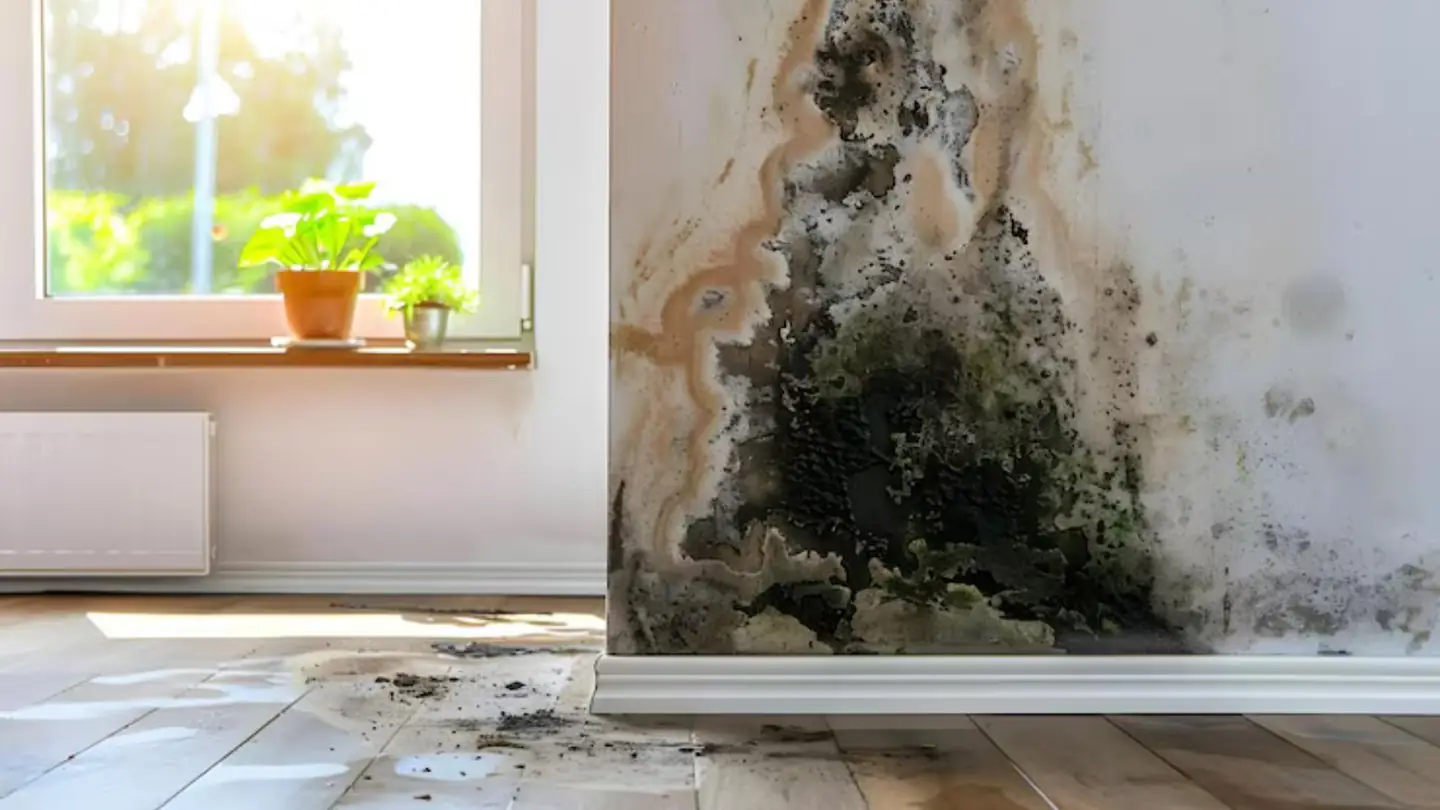
If your air conditioner is running and a ceiling stain is growing, the likely culprit is the condensate drain line. Cooling coils pull moisture out of humid air, and that water is supposed to leave through a pipe. When algae and sludge clog the pipe, the drain pan fills and overflows into whatever sits below.
In The Colony, TX that means a ceiling stain under an attic air handler, a wet closet floor or a damp wall in a hallway. Summer is when it shows up, because the system may run for most of the day and produce gallons of condensate.
Turn the system off first
- Set the thermostat to off. A running blower keeps feeding water into a pan that is already overflowing.
- Switch off the air handler at its own disconnect or breaker provided the panel is dry and reachable safely. If water is near the electrical panel, stay back and call the utility or 911 first.
- Place a bucket under any drip and poke nothing through a wet, bulging ceiling.
- Photograph the stain, the pan and any standing water before anything is cleaned or moved.
- Open the closet or attic hatch to look at the pan, but do not step on wet insulation or unsupported drywall.
Talk to dispatch
Describe what you see and we will tell you what happens next, in plain words, before any work starts.
What to check while you wait
Look at the primary drain pan under the air handler. Water standing in it means the line is blocked or the unit is sloped the wrong way. Many systems also have a secondary pan with a float switch, and if that switch has tripped, the unit may refuse to restart, which is its design working as intended.
Next, find where the drain line exits the house, usually a small PVC pipe near the outdoor wall or the plumbing stack. Dry outlet during a hot afternoon with the AC running tells you the line is plugged. A technician clears it with a wet vacuum or compressed gas and may flush it with a cleaning solution, and some installs include a cleanout tee for this.
HVAC tech or restoration crew?
| Problem | Who to call first | Why |
|---|---|---|
| Clogged drain line, full pan, unit down | HVAC contractor | The line, pan and float switch are part of the mechanical system. |
| Wet drywall, damp insulation, sagging ceiling | Restoration crew | Moisture meters and extraction find and remove water inside the structure. |
| Visible mold growth on drywall or framing | Restoration crew, possibly a licensed mold company | Containment and HEPA filtration may be needed. |
| Both at once | Both, in this order: HVAC, then restoration | Fix the source, then dry. Drying with an active leak just loops. |
Ask each trade to put what they found in writing. It helps with insurance and the rebuild.
When it becomes a mold job
Mold needs moisture, and an AC drip supplies a steady one. Drywall that stays damp can support mold growth, especially in a warm attic or a closed closet. Fixing the leak comes first, because no cleanup holds up while the source is still wet.
State law, through the Department of Licensing and Regulation, uses 25 contiguous square feet of visible mold as the dividing line. A patch that large in a covered home calls for a state-licensed mold remediator. Below it, an owner can clean the spot, though even a small job does not exempt a contractor from needing a license. Our mold remediation page explains containment and clearance in more detail. For questions about health, ask a physician rather than a contractor.
The insurance angle: sudden or gradual
Home policies usually respond to water damage that is sudden and accidental, according to the Texas Department of Insurance, while gradual leaks and seepage, plus the mold they cause, are usually excluded. A condensate line that clogged and flooded over a weekend may be treated differently from one that dripped for months, but the policy language decides. Ask your insurer, and ask early.
State guidance on hidden damage says to report within days of first seeing it, photograph before repairs and keep damaged items for the adjuster. Mold cleanup and testing are usually left out of a policy unless coverage was added. Keep receipts for temporary steps like a bucket or a new drain pan, and hold off on permanent repair until the insurer has looked.
Repair after drying
Once readings confirm the drywall and insulation are dry, the ceiling can be patched, textured and painted, which our water damage repair service covers. Replacing wet insulation matters too, because insulation holds moisture long after it looks dry. Add a float switch and a scheduled drain flush to your summer checklist so the pan never reaches this point again.
Local note
The Colony: permits for mechanical repairs
Permits are required for plumbing, electrical and mechanical repairs, and air conditioning equipment falls in that group, according to the building office on Main Street. Whether a simple drain-line clearing needs one is a different matter from replacing a coil or relocating an air handler. Call the department and ask before work begins, and ask your HVAC contractor who pulls the permit.
The same office keeps a contractor registration page, which is a useful place to check any contractor you hire for ceiling or mechanical repairs. Nothing on the city's building page speaks to water damage repair directly, which makes a phone call to the department the reliable route.
Frequently asked questions
Why is my ceiling stained when the roof looks fine?
AC condensate is a common cause. If the stain sits under an attic air handler or follows the path of the drain line, check the pan and drain before blaming the roof. A moisture meter can separate the two.
Can I just pour bleach down the condensate line?
Many HVAC techs use cleaning solutions on the line, but the product and amount matter, and a clog may need to be vacuumed out. Ask your HVAC contractor what is appropriate for your unit and avoid mixing chemicals.
How soon can mold start after a condensate overflow?
It depends on how wet the materials got, how warm the space is and how fast they were dried. Damp drywall and insulation can support growth quickly, so call a crew to map moisture and dry the area right away.
Do I need a licensed company for a small patch of mold near the air handler?
An owner can clean a patch under 25 contiguous square feet. From 25 up, state law requires a licensed remediator. If you are unsure of the size, a licensed assessor can measure it.
Does The Colony require a permit for AC repair?
The city requires permits for repairs to mechanical systems and existing buildings. Whether your specific repair qualifies is a question for The Colony Building Inspections. Call before work starts.
Do you serve nearby cities with attic air handlers?
Yes. Crews cover Frisco and Little Elm as well, using the same moisture mapping and drying approach.