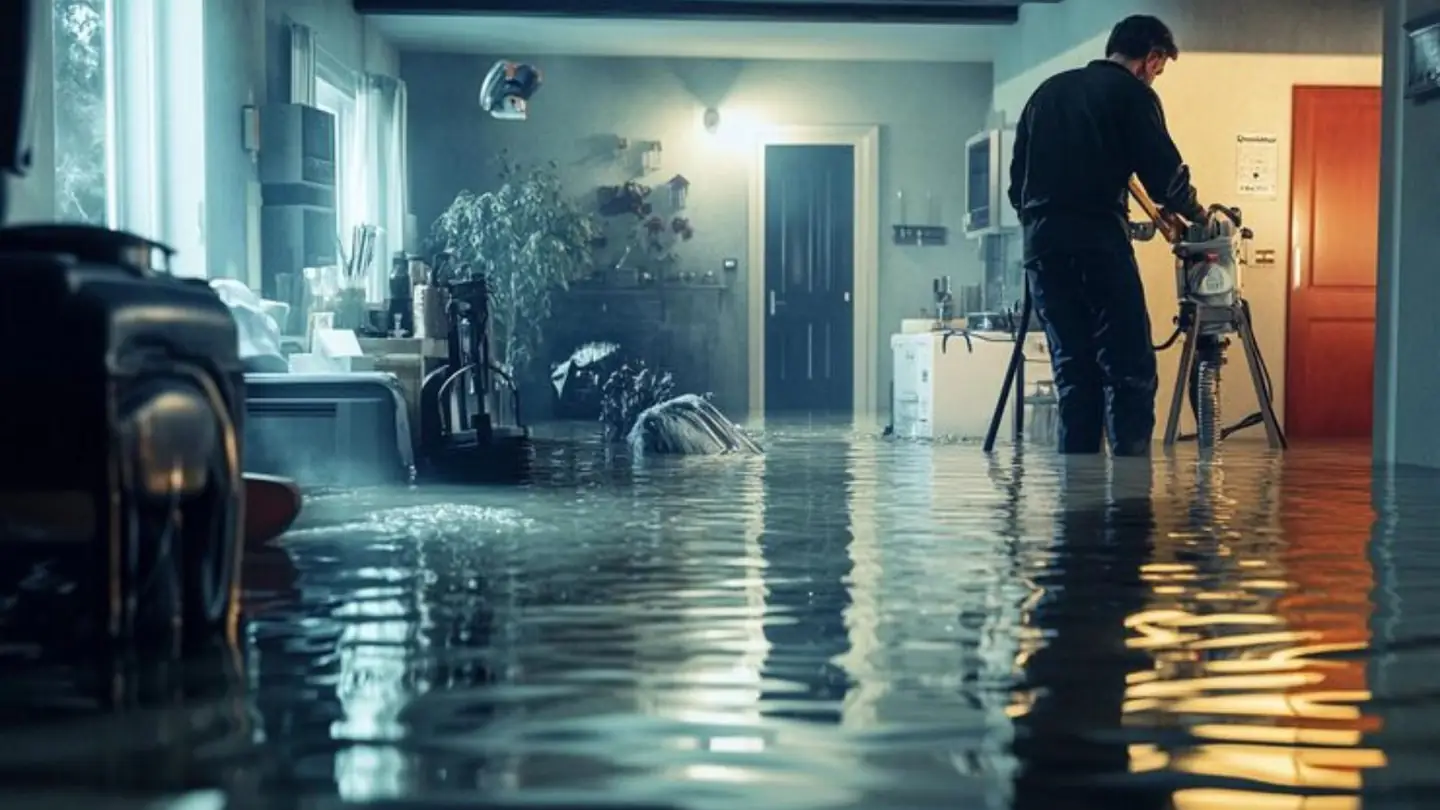
Water mitigation in The Colony, TX means limiting damage right now: stopping the source, pulling standing water, and setting drying equipment before wet materials start to fail. Our dispatch line is open 24/7, since a slow leak at midnight does as much harm as a burst pipe at noon.
While you wait for a crew, shut off the main water valve and lift valuables and electronics off the floor. Turn off power to the wet area only if the panel is dry and safe to reach, and do not let people or animals walk through water of uncertain origin.
Wet walls, a soaked carpet, a musty smell: what you are actually dealing with
A damp baseboard, a carpet that squishes underfoot or a smell like wet cardboard are not cosmetic problems. They tell you water is inside materials that cannot dry on their own. The trade term for the response is mitigation, and it means removing the water, drying the structure with controlled equipment, and measuring the result so nothing is sealed up wet.
If you can see it, a moisture meter can usually find more behind it. That gap between what is visible and what is wet is why waiting for stains to appear costs money.
Talk to dispatch
Describe what you see and we will tell you what happens next, in plain words, before any work starts.
The first 24 to 72 hours, hour by hour
Mitigation follows a sequence, and each step has a reason. Here is how it generally runs on a Colony job.
Hours 0 to 2: stop and secure
Find the source and shut it off. For a supply line, fixture or appliance, that means the local stop valve or the main. If you cannot find the main shutoff, The Colony Water Utility publishes a water and sewer emergency line with separate business-hours and after-hours numbers, and Public Works and Utilities can also direct you. Treat the main as the first thing to locate in any house you move into.
Hours 2 to 12: extraction
Standing water comes out with submersible pumps or truck-mounted and portable extractors. Carpet and pad are lifted or cut when saturated, and wet baseboard may be pulled so the wall cavity can breathe. Extraction removes more water than drying equipment ever will, which is why it comes first.
Hours 12 to 72: drying setup and mapping
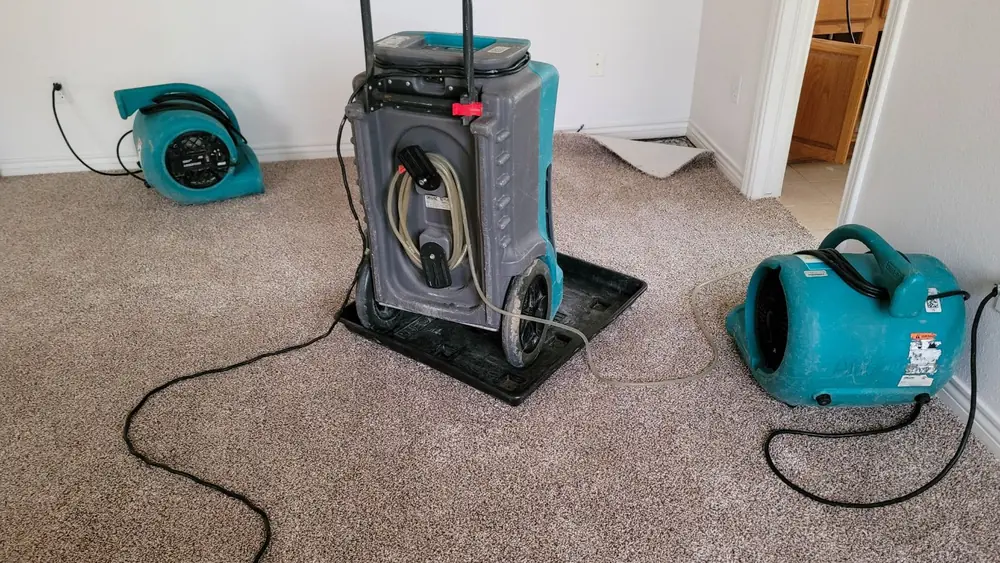
Air movers and dehumidifiers go in, and a moisture meter and thermal imaging camera map where the water traveled. Readings are written down at set points so the dry-out can be tracked over the coming days. The map is also the backbone of any insurance file.
When water is still running or soaking in
This is the situation to treat as an emergency: a pipe that cannot be shut off, ceiling that is dripping or bulging, water traveling under flooring to the next room, or any water near the panel or outlets. With a gas smell or visible sparks, exit the building and reach 911 or the utility ahead of the restoration line.
Clean-water leaks can turn into gray-water problems if they sit, and our same-day response when available is meant for exactly that window. Calls after hours, on weekends and on holidays go to the same dispatch. If the cause is sewage or river flooding, the flood damage restoration page covers that different category of water.
Structural drying: how the equipment works
Drying is physics, not luck. Air movers push dry air across wet surfaces to lift moisture into the air. Dehumidifiers pull that moisture out of the air, so it cannot settle again on cooler walls. LGR (low grain refrigerant) dehumidifiers work well in a warm, humid house, and desiccant units are used for colder or lower-humidity conditions.
Moisture meters read what the eye cannot, including the inside of drywall, framing and subfloor. Thermal imaging cameras show temperature differences that point to wet areas behind finishes, but they do not measure moisture on their own, so readings confirm what the image suggests. Monitoring visits repeat the readings, and equipment is adjusted or removed as spots dry.
Drying continues until readings return to the dry standard for each material, as described in ANSI/IICRC S500. Skipping that endpoint is how hidden dampness turns into odor or mold later.
How the work is measured and recorded
A moisture log is simple: location, material, reading, date. Together with dated photos of the loss and the drying setup, it shows what happened and how it was dried. Texas Department of Insurance guidance for hidden water damage is to photograph before repairs, keep damaged items for the adjuster and report within days. Policy deadlines differ, and some are short.
General insurance terms apply. Sudden and accidental water damage is often covered, gradual leaks usually are not, and flood generally needs separate flood coverage. Ask your insurer what your policy says, and hold off on permanent repairs until an inspection has happened.
- Photos of the source, the wet materials and the room before anything is moved.
- A moisture log with readings at set points over several days.
- A list of damaged contents you keep for the adjuster.
- Receipts for any temporary repairs, such as a tarp or a stop valve.
Mitigation compared with cleanup and repair
People often call all three the same thing, but they are different phases with different goals. Mitigation protects the structure. Water damage cleanup deals with contamination and removes items that cannot be saved. Water damage repair rebuilds what had to come out.
| Phase | Goal | Typical work |
|---|---|---|
| Mitigation | Stop spreading and dry the structure | Shutoff, extraction, air movers, dehumidifiers, moisture mapping |
| Cleanup | Remove contamination and ruined materials | Disinfecting, removing carpet, pad and wet drywall |
| Repair | Return the room to finished condition | Drywall, paint, trim, flooring, cabinets |
Standing water that needs pumping right now is covered under emergency water removal.
Mistakes that make mitigation harder
Some habits cause more harm than the leak. Running a household fan alone moves humid air without removing the water. Leaving wet carpet pad in place under new carpet keeps the floor wet for weeks. Painting over a stain seals moisture in.
Another common one is waiting for an adjuster before starting to dry. Insurers may deny a claim if the property was not protected from further damage, so take photos and begin mitigation. Keep the receipts.
What moves the cost of mitigation
Because mitigation depends on what the meter finds, we do not quote a number from a description alone. Call the dispatch line, describe what you see and we will explain what the figure for your home depends on.
| Factor | How it affects the job |
|---|---|
| Water category | Clean water is simpler than gray or black, which add removal and treatment |
| Area and square footage | Larger affected areas need more extraction time and equipment |
| Equipment and drying days | The number of air movers and dehumidifiers, and how long they run |
| Materials | Hardwood, plaster and dense cabinetry dry slower than carpet and drywall |
| Access and timing | Wall cavities, crawl spaces and attics need more labor to reach |
The written scope shows each factor before any work begins.
Serving The Colony and neighbors
The Colony water comes from city wells and treated surface water from Dallas Water Utilities, and a small area of Austin Ranch is served by the City of Plano. That matters when you need the shutoff: the main and meter location differ by lot, and who to call about a break in the street depends on who supplies the water. If your property is in Frisco instead, see our Frisco service area page.
Frequently asked questions
Do you handle water mitigation emergencies at night or on weekends in The Colony?
Yes. Someone is on the dispatch line at every hour, and same-day response is offered when available. When you call, say where the water is coming from, what is wet and whether power is involved.
My walls feel damp and the carpet smells musty. Is that mitigation?
Yes, it usually is. Those signs mean water is trapped in materials that will not dry by themselves. A technician maps the moisture, extracts what can be removed and dries the rest with equipment.
What does drying equipment do, and how long does it take?
Air movers push dry air across wet surfaces and dehumidifiers pull the moisture out of the air, while meters confirm progress. Drying time depends on the materials and conditions, and it typically takes several days. We keep equipment running until readings reach the dry standard, and never promise a number of days before measuring.
Should I wait for the insurance adjuster before drying starts?
No. Policies generally expect you to protect the property from further damage, and waiting lets water spread. Photograph everything, keep damaged items and receipts, and begin mitigation.
How do I find my main water shutoff in The Colony?
It is usually at the meter box near the street or at a valve where the line enters the house. If you cannot find or operate it, contact The Colony Water Utility emergency line, which has separate numbers for business hours and after hours.
Is mitigation the same as water damage restoration?
Mitigation is the first part. It stops the damage and dries the structure, then cleanup and repair finish the job. Many calls run all three phases under one scope.