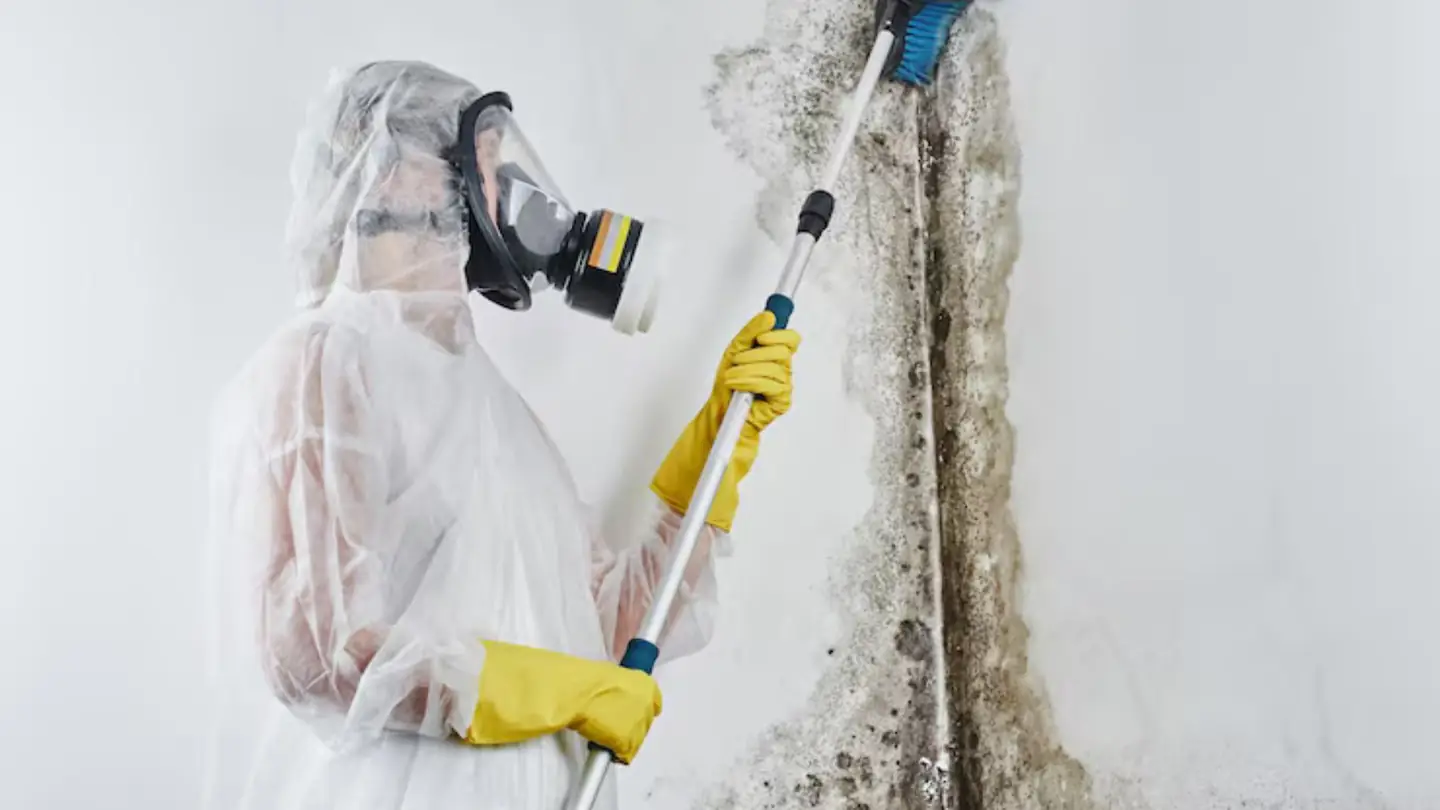
Mold remediation in The Colony, TX is the controlled removal of mold growth from a building, paired with fixing the moisture that let it grow. It happens inside containment, with filtered air and source removal, and it ends with a check that the work met its goal.
This page covers how that works, what Texas requires, and how to tell a small cleanup you can handle from a job that needs a licensed professional. If water is still actively coming in, start with the water mitigation page instead, since drying comes first.
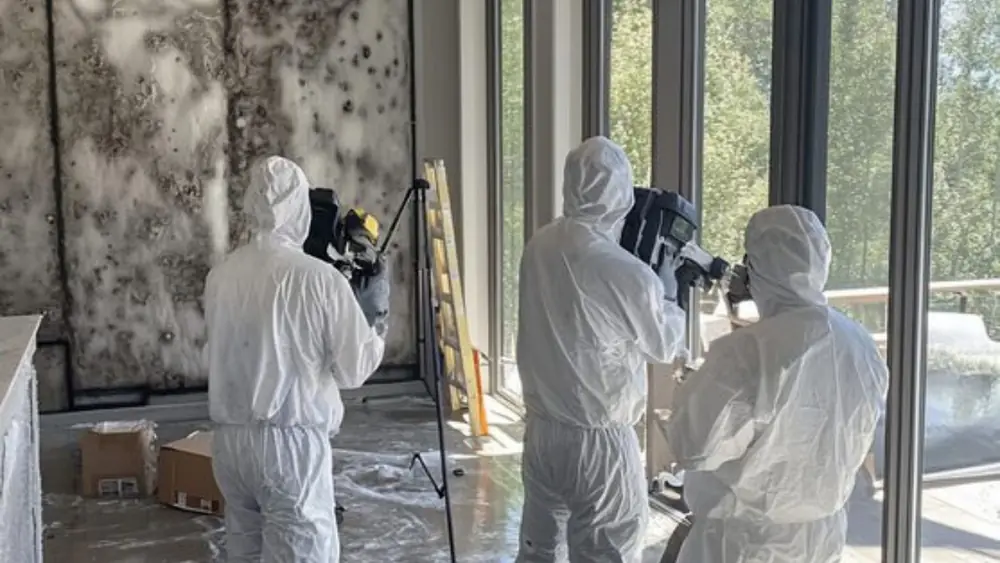
A musty smell, or dark spots on the ceiling after a leak?
That is how most mold jobs start. A smell that never leaves a room, dark patches on a ceiling under a bathroom or roof, paint that bubbles, or drywall that feels cool and damp all point to moisture that stayed too long. The trade term for what comes next is mold remediation.
A smell alone does not prove mold, and a stain alone does not either. What matters is the water source, the size of the affected area and what is behind the surface.
Talk to dispatch
Describe what you see and we will tell you what happens next, in plain words, before any work starts.
Where mold shows up after a leak in a North Texas home
The leaks that feed mold are rarely dramatic. They are slow ones: an air conditioner condensate line that backs up, a window that leaks during a storm, a roof penetration, a toilet seal, a washing machine hose that weeps behind the machine, or a sink supply line inside a cabinet. A slow leak can run for weeks before a stain appears.
Places to look include ceilings below bathrooms and attic units, the wall behind a washer, the back of vanity cabinets, closets on exterior walls and the baseboards along a room that once got wet. Mold also grows on the back side of drywall where you cannot see it.
Check these spots with a flashlight, and note whether the material feels soft or damp to the touch.
Mold removal and black mold cleanup
Mold removal means taking out the material the mold is growing on, not just scrubbing the color off the surface. Porous materials like drywall, insulation, carpet and ceiling tile with growth are usually cut out and bagged. Solid framing and concrete are cleaned with HEPA vacuuming and wire brushing, and sometimes sanded, then wiped and treated.
People often search for black mold cleanup, but color does not tell you the species or change the method. A dark patch gets the same treatment as a green or white one: contain, remove the source material, clean and verify. A lab test can name the type, and in most homes the job does not turn on that answer.
Bleach on a wall is not removal. It can leave the porous material behind, and it adds moisture, so any attempt at a surface fix should come with an honest look at what is behind it.
Mold after water damage
Mold after water damage usually means drying was late, incomplete or skipped. The leak has to be fixed first. If the source is still wet, any cleanup is temporary, because mold needs moisture and will start again wherever it is still present.
That is why the order matters. Stop the water, remove soaked material, dry the structure to the standard for each material, then remove the growth. Our water mitigation work handles the drying side with moisture meters, air movers and dehumidifiers.
If mold is already visible, say so when you call. Crews handle wet material differently when growth is present, since tearing it out without containment can spread dust and spores to clean rooms.
Timing also affects the paperwork. A leak that was dried properly and promptly leaves a clear record, while one that sat for weeks makes it harder to show your insurer when the damage began. Keep drying logs, moisture readings and photos from the water stage, since an assessor may ask for them later.
How remediation is done
Remediation follows ANSI/IICRC S520, the published standard for mold remediation. Ask any company you are considering whether its crews work to S520, and whether the work follows the Texas licensing rules. A direct answer tells you a lot.
The usual sequence on a job that needs full control:
- Find and fix the moisture source. No remediation plan holds up if the leak is still active.
- Set up containment. Plastic sheeting and zipper doors seal the work area from the rest of the home.
- Create negative air. A negative air machine with a HEPA filter pulls air out of the contained area so dust moves in, not out.
- Remove the source material. Affected drywall, insulation and flooring are cut out, bagged and carried out in sealed bags.
- Clean what stays. HEPA vacuuming, wire brushing and wiping on framing and hard surfaces.
- Dry and verify. Moisture meters confirm the area is dry before anything is rebuilt.
Under 25 square feet or 25 or more: who can do the work
The Texas Department of Licensing and Regulation sets the line. Remediating 25 contiguous square feet or more of visible mold in covered residential property must be done by a state-licensed mold remediator. Under 25 square feet, an owner or maintenance staff can clean it.
A licensed contractor working on a small job is not exempt from the law, so a small area does not remove the need to check licensing when you hire someone. Measure the area honestly, and when it is close to the line, treat it as the larger case.
| Situation | Who can do the work | Practical note |
|---|---|---|
| Under 25 contiguous sq ft of visible mold | Owner or maintenance staff may clean it | Fix the moisture first, wear protection, bag material before carrying it through the house. |
| 25 sq ft or more, visible mold | A state-licensed mold remediator | Expect a written protocol, containment and a certificate at the end. |
| Mold behind walls or under flooring, size unknown | Treat as the larger case until opened | A moisture assessment tells you how far it goes. |
| Mold clearance needed for a sale or loan file | Licensed remediator plus separate assessor | See the next section on clearance. |
This is a plain-language summary of the state rule. For your own project, check with the Texas Department of Licensing and Regulation.
Mold testing, inspection and clearance
Testing and remediation are separate jobs on purpose. Under TDLR rules, a person generally may not do both the mold assessment and the remediation on the same project. The assessor writes the protocol, the licensed remediator carries it out, and then a licensed assessor who did not write the protocol checks the result.
That final step is called clearance. When the remediator's work passes, the remediator issues a Certificate of Mold Damage Remediation, known as a CMDR. Only a licensed remediator can issue it.
Clearance matters most when a lender or a buyer asks for proof. A home sale or loan may require mold clearance before closing, and a CMDR plus independent clearance testing is the kind of record that answers the question. We cannot promise that any particular lender or buyer will accept it, so confirm with them early.
If you only want to know what you have, a licensed assessor can inspect, sample and write a protocol without doing the cleanup. That keeps the person who finds the problem from being the person paid to fix it.
Options and honest trade-offs
Clean it yourself
Reasonable under 25 square feet when the leak is fixed and the material is hard and non-porous. Wear a fitted respirator and eye protection, and do not stir up dust.
Hire a licensed remediator
Required at 25 square feet or more. Costs more, and gives you containment, filtration, documentation and clearance.
Assessment first
A licensed assessor inspects and writes a plan before work begins. Takes more time, and separates the roles as TDLR rules intend.
Paint over it
Does not fix moisture or remove growth. Stains tend to reappear and a buyer's inspector may find it.
What drives the cost of mold remediation
Pricing depends on what is found when the area is opened up, so a number given over the phone is a guess. These are the factors that move it.
| Factor | Why it matters |
|---|---|
| Area affected | More square footage means more containment, more material removed and more labor. |
| Materials involved | Drywall comes out quickly. Framing, plaster and hardwood need more cleaning. |
| Access | Attics and crawl spaces slow the work and change how containment is built. |
| Testing and clearance | Assessment and post-remediation testing are separate line items from the cleanup. |
| Rebuild | Replacing drywall, insulation and flooring follows the remediation as its own scope. |
Call and describe what you see, and we will explain how these apply to your project and give you a real number once the scope is known.
Insurance, testing costs and what policies exclude
Home and renters policies often exclude mold. The Texas Department of Insurance notes that most policies do not cover mold cleanup or testing unless coverage was added, and that gradual leaks and flood-related mold are typically excluded. Read the policy before you assume, and ask your insurer.
If you do file a claim, the Texas Department of Insurance advises reporting early, photographing before repairs and keeping damaged items for the adjuster. It also states that a mold professional should be state licensed and provide a certificate.
Mold remediation in The Colony: permits and rentals
Permit questions go to The Colony Building Inspections and Permits at 6053 Main Street. Rebuilt walls and new plumbing, electrical or mechanical work are the kinds of changes the city regulates. If remediation leads to rebuilt walls or new plumbing, call the department at 972-624-3100 to ask whether your scope needs one.
About four in ten households here rent. If you rent and find mold, tell your landlord in writing, photograph it and keep a copy. Your landlord is typically responsible for building repairs, while your own renters policy decides what happens to your belongings.
Once remediation is done and the structure is dry, rebuilding the walls and finishes is covered by water damage repair. For a property near Plano, our Plano location page shows how we work there.
Frequently asked questions
How do I know if I need a licensed mold remediator in The Colony?
If the visible mold covers 25 contiguous square feet or more in a residence, Texas requires a state-licensed mold remediator. Under 25 square feet, an owner or maintenance staff can clean it. When the area is hidden or close to the line, treat it as the larger case and ask for a licensed professional.
I smell mustiness but cannot see mold. What should I do?
Look for the moisture first: a recent leak, a damp wall, a condensate line, a damp closet. A smell is not proof by itself, and a stain is not either. A licensed assessor can inspect and sample, and a moisture assessment can find hidden wet material.
There are dark spots on my ceiling after a leak. Is that mold?
It could be, or it could be water staining. The way to tell is to find and fix the leak, check whether the material is still damp and have the area inspected. Do not paint over it until you know.
Will mold come back after remediation?
No one can promise that. Mold needs moisture, so what protects the home is fixing the water source and keeping the area dry. Remediation removes the growth, and clearance testing checks that the work met its goal at that time.
Can the same company test and remediate?
Generally not on the same project. Texas rules separate mold assessment from remediation, and clearance has to come from a licensed assessor who did not write the protocol. A licensed remediator issues the Certificate of Mold Damage Remediation.
A buyer or lender wants mold clearance. What do I need?
Ask them what they accept before you start. Clearance testing by an independent licensed assessor and a CMDR from a licensed remediator are the standard records. We cannot promise any lender will accept them.
Does insurance pay for mold remediation?
Often not. Most policies do not cover mold cleanup or testing unless coverage was added, and gradual leaks and flood-related mold are usually excluded. Ask your insurer and check the policy language.