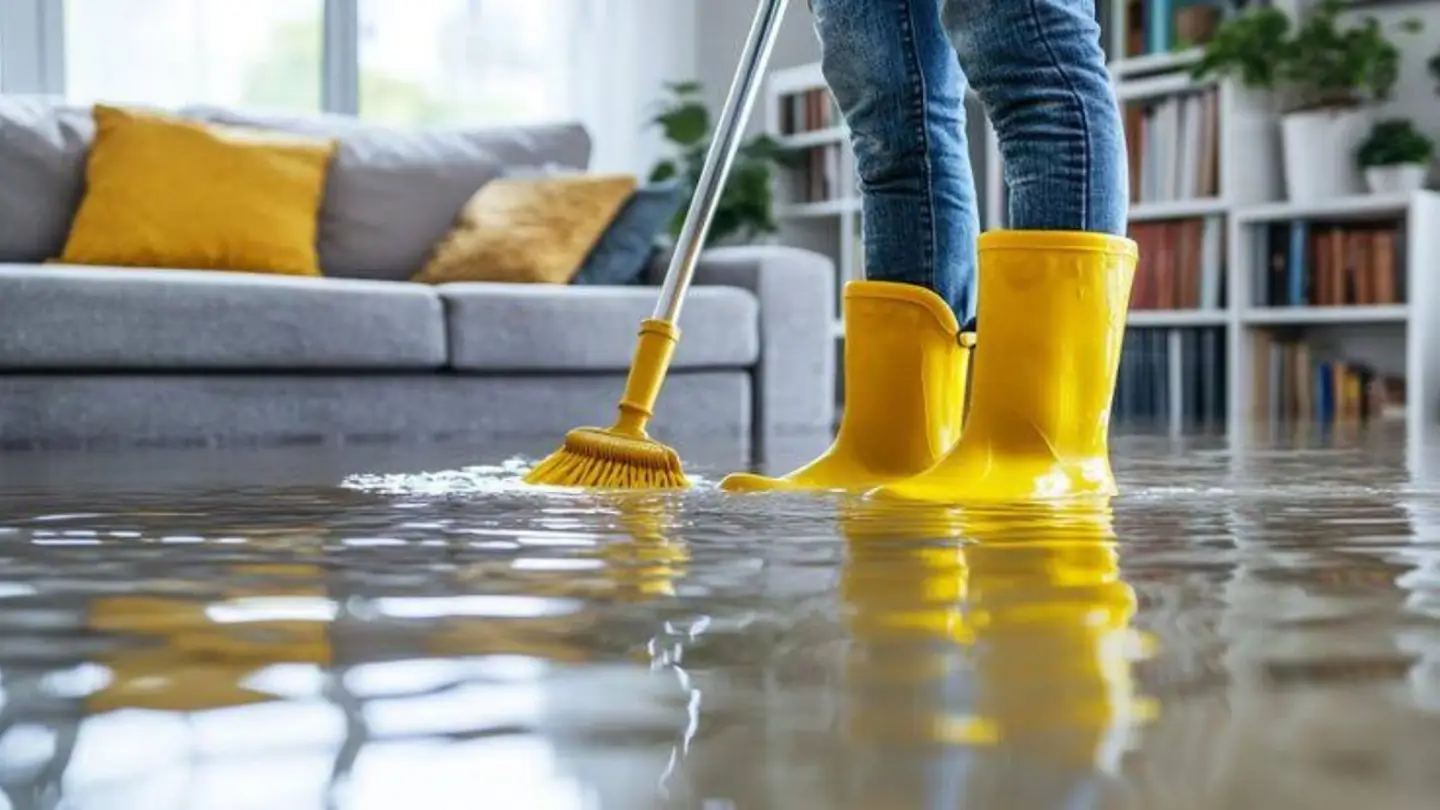
Water is off but the floor is soaked and the house smells wrong? Our dispatch line is open 24/7, so call while you do the basics. Close the main water valve and lift valuables off the floor. Keep children and pets away from any water that came from a drain or outside, and switch off power to wet rooms only when the panel is dry and safe to reach.
Water damage cleanup in The Colony, TX is the removal of wet, contaminated or unsalvageable material after a water loss, followed by sanitizing and deodorizing what remains so the structure can dry clean.
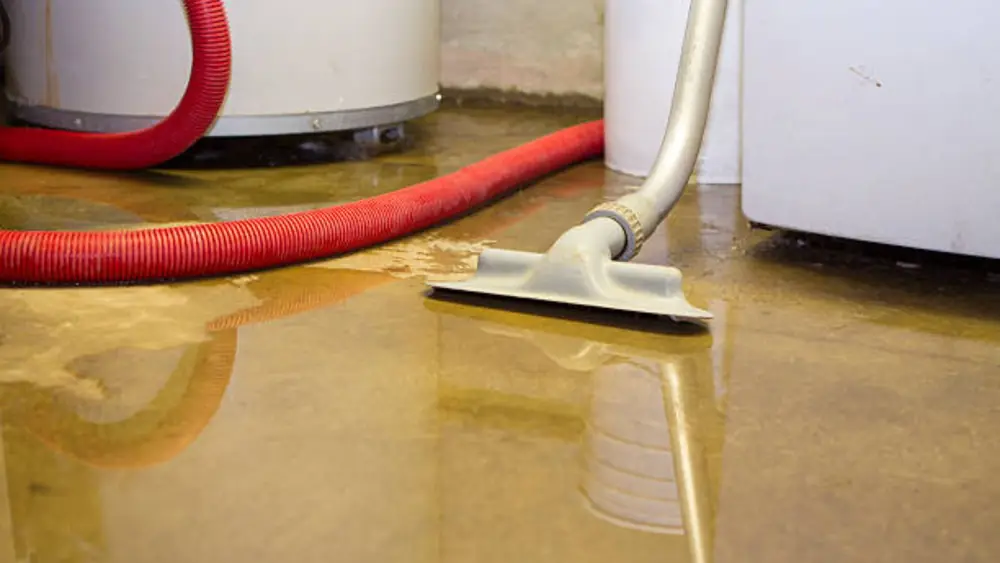
What cleanup actually removes in the first 48 hours
Cleanup is mostly subtraction. Anything that soaked up water and cannot be dried in place quickly comes out, because wet organic material feeds odor and microbial growth within days. The first 48 hours decide how much of that subtraction you end up needing.
Typical removals on a residential job look like this:
- Carpet pad. Foam and rebond pad hold water like a sponge and rarely dry to a clean state. Carpet itself can sometimes be lifted, cleaned and re-laid after clean water, but the pad almost always goes.
- Wet insulation. Fiberglass batts that sag or stay damp lose their value and hold moisture against framing. Blown-in insulation in a soaked wall cavity is usually removed too.
- Drywall cut-outs. Crews cut above the visible wet line so the wall cavity can be opened and dried. Wicking can carry moisture above what you can see.
- Baseboards and trim. Pulled to release trapped water and to give air movers access behind the wall.
- Debris and ruined contents. Swollen particleboard furniture, soaked cardboard and wet upholstery that cannot be saved.
Talk to dispatch
Describe what you see and we will tell you what happens next, in plain words, before any work starts.
Water categories decide how aggressive cleanup gets
The industry standard ANSI/IICRC S500 sorts water into three categories, and the category sets the rules for what can be kept. A clean supply line break and a sewage backup are not the same job, even if both leave you with a wet floor.
Water also changes category with time. Clean water that sits for days in a warm house can degrade, which is one more reason cleanup should not wait for the weekend.
| Category | Typical source | What it means for cleanup |
|---|---|---|
| Category 1 (clean) | Broken supply line, tub overflow, rainwater from a clean source | Porous items often dry in place. Pad and wet insulation still come out if they cannot dry fast. |
| Category 2 (gray) | Washing machine discharge, dishwasher overflow, toilet overflow with urine only | Affected pad and carpet are usually discarded. Hard surfaces get cleaned and treated with antimicrobial. |
| Category 3 (black) | Sewage backup, river or lake flooding, long-standing water | Porous materials are removed and discarded. Crews wear protective gear and the area is cleaned, treated and dried. |
Your restorer assigns the category on site after looking at the source and how long materials stayed wet. Ask to be told which category your job is.
Sanitizing, antimicrobial treatment and odor
Once the wet material is gone, the remaining surfaces get cleaned. Crews scrub framing, subfloor and concrete, then apply an antimicrobial treatment suited to the category. This step is about the surface you will be living behind, not a cosmetic wipe.
Odor control follows the cleanup, not the other way around. Spraying fragrance over wet carpet only hides the problem for a day or two. Real deodorizing means the source material is out and the area is dry, then HEPA air scrubbers and antimicrobial treatment can address what lingers in the air and on the framing.
A smell that returns after the room felt dry usually means moisture is still sitting somewhere. That is a drying question, and our water mitigation work uses moisture meters and thermal imaging cameras to find it.
Contents, pack-out and what to keep or discard
Pack-out simply means moving your belongings out of the affected rooms, sometimes to storage, so crews can work and so items are not re-wetted. Furniture legs on wet carpet leave stains and swelling within hours, so lifting pieces onto foil, plastic or blocks is a good first move if you can do it safely.
Keep or discard decisions follow the water category and the material. Use this as a starting point, then let the crew confirm on site.
| Item | After Category 1 | After Category 2 or 3 |
|---|---|---|
| Solid wood furniture | Often dried and kept | Often cleaned and treated, case by case |
| Upholstered sofas and mattresses | Sometimes salvageable if caught fast | Usually discarded |
| Particleboard and laminate furniture | Often swells and fails, plan on discarding | Discard |
| Books, paper, photos | Freeze or air dry quickly to try to save | Usually discarded, copy what you can |
| Hard goods like glass, metal, plastic | Wash and dry | Clean and sanitize |
Salvage is never promised before the item is inspected. Keep damaged items for your adjuster until they say otherwise.
Documenting the loss for your insurer
Cleanup removes the evidence, so photograph first. The Texas Department of Insurance advises taking photos before repairs start, keeping damaged items for the adjuster to see and keeping receipts for temporary repairs. Do not make permanent repairs until the insurer has inspected.
Sudden and accidental water damage, such as a burst pipe, a toilet overflow or a failed washing machine hose, is often covered under home and renters policies. Gradual leaks usually are not. Flood is typically excluded and needs a separate flood policy, so check your policy before you assume.
Report the loss soon after you find it, because some policies set short deadlines. A claim can also be refused when the owner let the loss keep growing, which is why stopping the water and starting cleanup matter on paper as well as in the house.
Two ways to handle cleanup, with honest trade-offs
A small Category 1 spill, a few square feet of wet carpet, can be handled by a homeowner with a wet vac, fans and a quick call to a restorer for moisture readings. That is a reasonable first response.
Anything larger, anything that touched a wall cavity, or anything Category 2 or 3 is a different job. Hiring a professional crew costs more up front but it brings extraction units, air movers, LGR dehumidifiers and meters, and it leaves a written record. Cutting corners here often means paying twice when hidden moisture turns into a rebuild. If you are unsure of the scope, our emergency water removal page explains the pump-out stage that comes before cleanup.
What drives the price of cleanup
We do not quote a number without seeing the loss. Cleanup cost follows a handful of factors, and knowing them helps you compare any two estimates fairly.
| Factor | Why it matters |
|---|---|
| Water category | Category 3 needs more protective work, more removal and more disposal than Category 1. |
| Square footage affected | More wet area means more labor, more debris and more equipment. |
| Materials involved | Carpet pad is quick to remove. Tile, hardwood and plaster take longer. |
| Time since the loss | Water that sat for days has spread into walls and may have degraded. |
| Rebuild scope | Cut-outs and pulled flooring set up the repair work that follows. |
Insurance may cover sudden and accidental losses, but coverage depends on your policy. Ask your insurer. Call the dispatch line and describe what happened and we will explain your real number once we know the scope.
Cleanup in The Colony: utilities, permits and renters
If the water came from the city side of the meter, call the water and sewer emergency line before you call anyone else. The Colony Water Utility is city-owned, and the line is 972-625-2741 during business hours and 972-624-4433 after hours. Your side of the meter is yours to fix, so a plumber handles the line and we handle what the water left behind.
Before tearing out and rebuilding, ask the city. Permits in The Colony are handled by Building Inspections and Permits at 6053 Main Street, whose published page says nothing about water damage repair by name. Plumbing, electrical and mechanical changes and alterations to existing buildings are what trigger one. A phone call to the department at 972-624-3100 tells you whether your repair scope needs one.
Roughly four in ten households in The Colony rent, so if you are a renter, tell your landlord or property manager the same day and photograph the damage. Your renters policy may cover your belongings while the landlord's policy handles the building, so check both. For a property in Frisco, our Frisco location page covers the same kind of work.
When cleanup ends and repair begins
Cleanup leaves you with a clean, dry, open structure. It does not leave you with finished walls. Once drying is complete, rebuilding the drywall, flooring and paint falls under water damage repair, and keeping the two stages with one crew or one plan avoids gaps in the paper trail.
Call the dispatch line at night or on a weekend the same way you would at noon. Same-day response is offered when available, and a crew can start the wet-material removal that limits how far the damage spreads.
Frequently asked questions
Do you handle water damage cleanup emergencies at night or on weekends?
Yes. Calls are taken around the clock, holidays included, and crews offer same-day response when available. If the water is still running, shut the main valve first, then call so crews can plan what to bring.
What is the difference between water damage cleanup and water mitigation?
Cleanup removes wet debris and contaminated material and sanitizes what remains. Mitigation is the wider job of stopping the spread, which includes drying with air movers and dehumidifiers. On most losses the two overlap, and one crew often does both.
Can I keep my carpet after water damage?
Sometimes, if the water was clean and the carpet is lifted and dried fast. The pad underneath is usually replaced regardless. After Category 2 or 3 water, carpet is normally discarded.
Will my insurance pay for cleanup?
That comes down to your policy and what caused the loss. A pipe that bursts suddenly is the easier case, a slow leak is harder, and flood sits under its own policy. Take photos first, set aside ruined items for the adjuster and get your insurer's view before permanent repairs.
Do you remove sewage and Category 3 water?
Yes, with protective gear and containment where needed. Keep everyone out of the area, do not run fans that spread contamination and call the restoration line. Porous materials that touched the water are removed, and the remaining surfaces are cleaned and treated.
How long until the house smells normal again?
It depends on how fast wet material came out and how long drying takes. Odor fades once the source is removed and moisture readings return to the dry standard for each material. A lingering smell after cleanup usually points to hidden moisture, which meters and thermal cameras can locate.