
Flood damage restoration in The Colony, TX is the removal of storm, river, lake-edge or groundwater from a building, followed by cleaning, treatment and structural drying. Our dispatch line is open 24/7, because flood water does its worst work in the first day.
While you wait, stop any source you can safely reach and shut off the main water valve if a pipe is involved. Switch off power to wet rooms if, and only if, the panel is dry and easy to reach. Raise valuables off the floor and keep people and pets away from the water.
When flood water is in the house
Treat it as an emergency if water is above the baseboard, is moving, smells of sewage or soil, or is touching anything electrical. Water that comes from outside the building is not clean, even when it looks clear. It carries silt, lawn chemicals and sewer overflow, and anything porous it touches becomes a contamination problem.
Time matters for two reasons. Drywall and insulation wick water upward, so the wet line on a wall climbs well above the waterline on the floor. And mold needs moisture and can begin growing on wet materials in the days that follow, which is why we ask you to call the same day you see the water. After-hours and weekend calls get the same dispatch as weekday ones.
Before you touch anything
Stay out of standing water if it is near a panel, outlet, appliance or extension cord. Cut power only if the panel is in a dry spot you can reach without stepping through water.
Gas odor or sparks mean you should get out and contact 911 or the utility before you contact us.
Talk to dispatch
Describe what you see and we will tell you what happens next, in plain words, before any work starts.
Where flooding comes from around The Colony
Lewisville Lake runs along The Colony, and the city counts about 23 miles of shoreline inside its limits. Homes near Stewart Creek Park, Hidden Cove or the old Eastvale area on the eastern shore sit closer to the water than most, so check the FEMA flood map for your address.
The city cites FEMA community panel 481581, and its floodplain code (Sec. 9.5-22) requires new residential lowest floors, garages included, to sit at or above a set elevation.
Heavy rain is the more common trigger. The area averages 37.01 inches of precipitation a year, and when storm drains and drainageways are overwhelmed, water finds low doorways, garage slabs and window wells. The city's Storm Water Utility maintains streets, alleys and drainageways, so a blocked inlet near your property is worth reporting to Engineering.
Freeze events are a third source. DR-4586, the federal declaration for the 2021 Texas winter storms, included Denton County, and burst pipes during that event left water running through ceilings and walls in many homes. The area averages 29 freezes a season, so frozen supply lines are not a once-in-a-lifetime risk.
Water categories: what the water is, and what that means
The ANSI/IICRC S500 standard sorts water into three categories, and the category sets how much has to be removed rather than dried. Flood water from outside usually starts at Category 3 or is treated as such, because it picks up contaminants as it moves.
| Category | Typical source | What it means | What we do |
|---|---|---|---|
| 1 (clean) | Supply line, tub overflow, rain through a roof | Safe at the source but degrades within a day or two | Extract, dry and monitor, save most materials |
| 2 (gray) | Washing machine or dishwasher discharge, toilet overflow with urine only | Contains contaminants that can cause illness | Extract, remove porous materials such as carpet pad, clean and treat |
| 3 (black) | Sewage, river or storm flooding, groundwater | Grossly contaminated and unsafe | Remove saturated porous materials, clean and disinfect, dry the structure |
Clean water that sits untreated can move up a category, so category is never fixed.
Basement and below-grade flooding cleanup
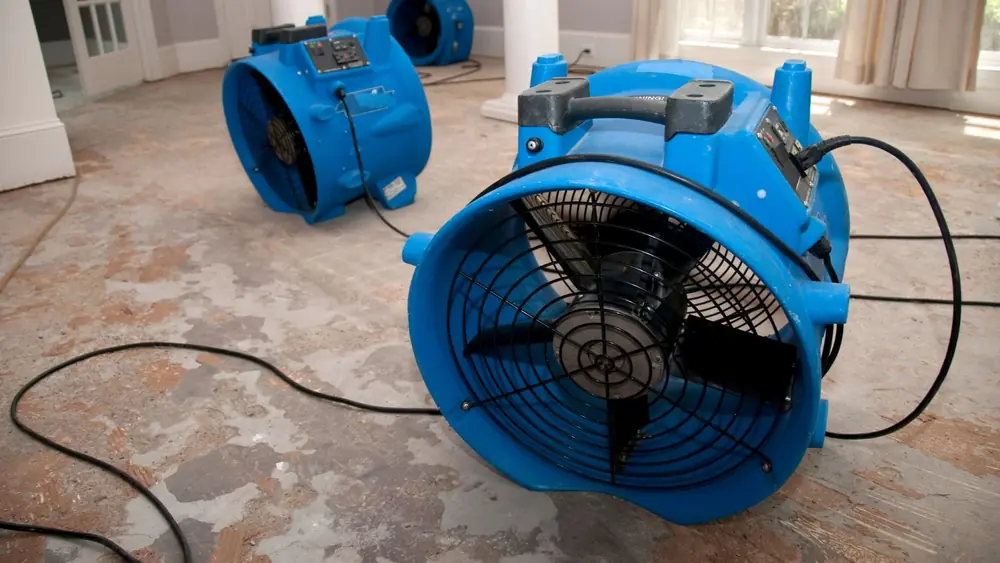
We do not claim most Colony homes have basements. Below-grade flooding here usually means a finished walk-out level, a sunken room, a garage bay or a lower level at a lakeside lot. The cleanup is the same wherever it happens: extract with submersible pumps and portable or truck-mounted extractors, remove soaked drywall and carpet, treat the surfaces, then dry with air movers and dehumidifiers.
Restoration is not waterproofing. We dry and rebuild the damaged space, but we do not seal foundations, install sump systems or fix grading. Those are separate trades, and a space that keeps flooding needs the cause corrected by a waterproofing or drainage contractor.
Below-grade water is often groundwater, which means Category 3 and a hydrostatic push that keeps coming until the water table drops. We usually extract, begin drying and recheck over the next visits rather than assume one pass is enough. Ask about monitoring before you agree to a scope.
Sewage backup cleanup
A sewage backup is Category 3 water from the first minute. It can arrive through a floor drain, a toilet or a tub after a main line blockage or a heavy rain event, and it leaves bacteria in everything it touches. Do not wade in, do not run the vacuum you use for the house, and keep children and pets away.
If the water is near electrical outlets, a panel or appliances, call 911 or the utility before you call us. For sewer or water problems at the city main, The Colony publishes a water and sewer emergency line (business hours, and a separate after-hours number). If the blockage is in the city line, the city has to clear it before cleanup can hold.
Our crews extract the liquid, remove porous materials that cannot be disinfected such as carpet, pad and low drywall, treat the hard surfaces, and dry the structure. Contents like upholstered furniture are often discarded. Document everything before it leaves.
Crawl space and whole-house flooding
Crawl space water hides. It soaks insulation, wicks into floor framing and can sit for weeks before anyone looks, so a musty smell in the first-floor rooms is a clue. We inspect, pump, remove wet insulation, and dry the cavity with air movers and a dehumidifier sized for the space.
When flood water reaches an entire level, the job becomes a sequence: extraction, removal of the wet drywall, pad and flooring, then structural drying, then rebuilding. Our water mitigation page explains the drying phase, and emergency water removal covers the first stage of extraction.
Choosing between drying in place and tearing out
Not every flooded house needs to be gutted. The right level depends on the water category, how long it sat and what the materials are, and these four paths cover most jobs. Anything that stays wet around mold-prone materials for days is the usual reason a dry-in-place plan turns into a tear-out.
Dry in place
Works for Category 1 water caught within a day, on hardwood or solid wood framing. Cheaper in labor and keeps more of the house, but needs close monitoring with a moisture meter.
Partial tear-out
Typical for Category 2 or 3 water. Wet carpet, pad and the lower stretch of drywall come out, while framing and slab are cleaned and dried.
Full demolition
Used when water has been present for days, the structure is saturated, or sewage has soaked porous finishes throughout. It costs more now but avoids hidden mold.
Contents pack-out
Furniture and belongings that can be cleaned are moved out and stored while the structure is dried. Anything porous that touched Category 3 water is usually discarded.
What moves the cost of flood restoration
Flood jobs are priced from the scope, so the factors matter more than any average. A single room and a whole level are different jobs even when both started with the same storm.
| Factor | Effect |
|---|---|
| Water category | Category 3 needs more removal and treatment than Category 1 |
| Square footage and depth | More area and deeper water means more extraction and more equipment |
| Drying days and equipment | Number of air movers and dehumidifiers and how many days they run |
| Materials affected | Carpet and drywall are cheap to replace, hardwood and built-ins are not |
| Rebuild scope | Cleanup is one phase, reconstruction is another |
We give a written scope before work starts so you see how each factor applies to your house.
Insurance is where flood surprises happen. The Texas Department of Insurance notes that flood is outside most home and renters policies, though a few include it. Under the National Flood Insurance Program the claim window is 60 days, and with any other policy you should call your insurer as soon as possible. Photograph everything before it is moved and keep receipts. Call the dispatch line and we will explain what the real cost for your property depends on.
Standing up to the next storm
Clearing gutters and downspouts, grading soil away from the slab and knowing where the main water valve is cost little, and they matter. If your property is in the mapped floodplain, ask the city's Engineering office about the elevation requirements before remodeling. Neighbors in Little Elm face lake-edge conditions too, and our crews cover that service area as well.
Frequently asked questions
Do you handle flood damage restoration emergencies at night or on weekends in The Colony?
Yes. Dispatch never closes, so a flood on a Sunday night gets the same attention as one on a weekday, with same-day response when available. Tell the dispatcher what is flooded, how deep, and whether power or sewage is involved so crews arrive with the right equipment.
Is flood water always Category 3?
Water that enters from outside is generally treated as Category 3 because of what it picks up along the way. Clean supply-line water can be Category 1 at first and degrade if it sits. The S500 standard is the reference for these categories.
Does homeowners insurance cover flood damage in Texas?
Usually not. The Texas Department of Insurance says most home and renters policies exclude flood, and a few include it. Burst pipes and other sudden internal water losses are treated differently, so read your policy or ask your insurer.
Can you waterproof my basement after the cleanup?
No. Restoration dries and repairs the damaged space but is not waterproofing. If the room floods repeatedly, a waterproofing or drainage contractor should address the cause.
What should I do first if sewage comes up through a drain?
Stay out of the area, keep pets and children away, and avoid contact with the water. If it is near outlets or the panel, call 911 or the utility first. Then call the dispatch line and the city's water and sewer emergency line.
How long does flood drying take?
It depends on the materials, the depth and conditions in the house. It is typically several days, with equipment running until readings return to the dry standard for each material, and no honest promise can be made before the meter checks.