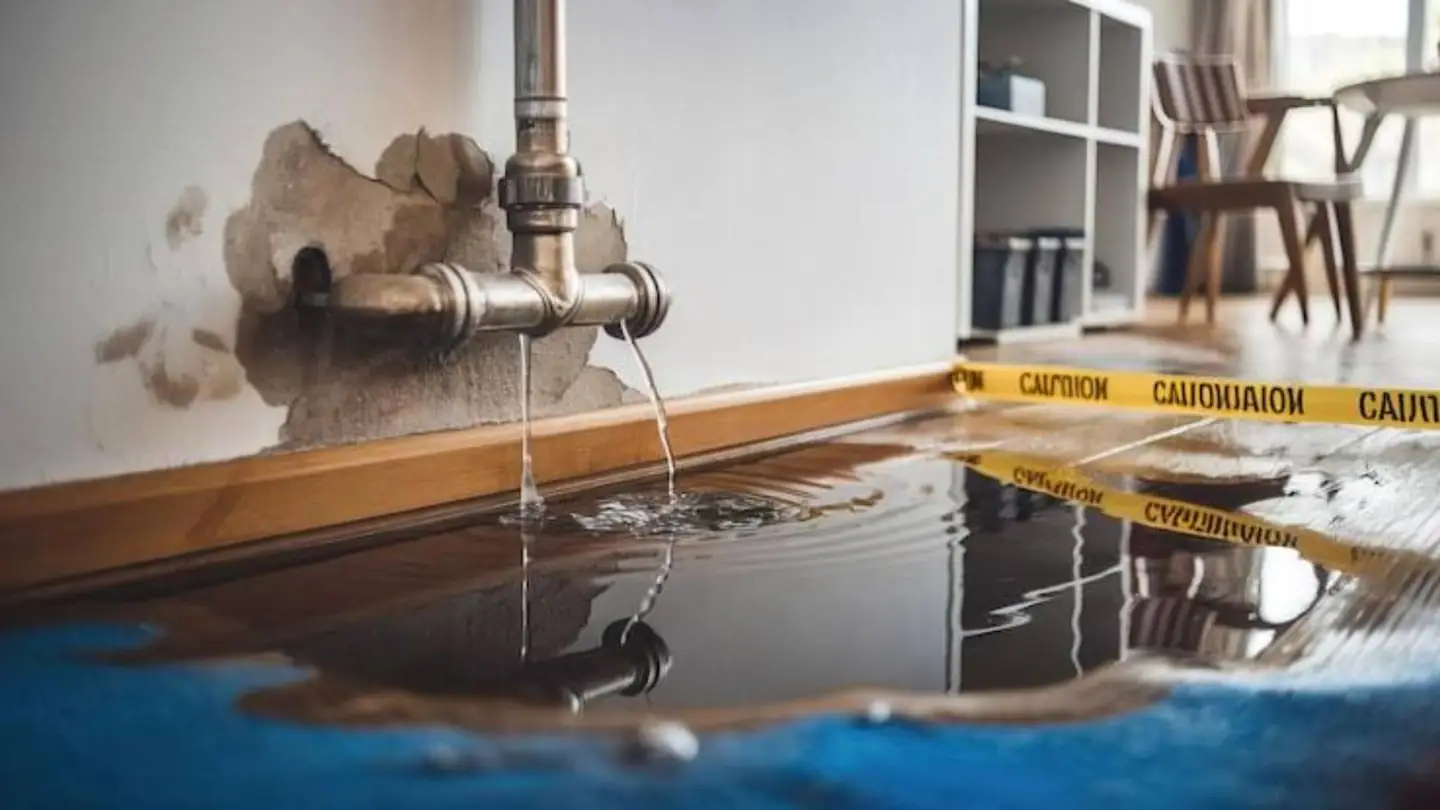
If water is standing in your home, the clock is already running, and our dispatch line is open 24/7. While you wait for a crew, stop the source and shut off the main water valve. Cut power to wet areas only when the panel is dry and safe to reach. Lift valuables above the water and keep people and pets away from anything that came from a drain or from outside.
Emergency water removal in The Colony, TX is the extraction of standing water from a structure using submersible pumps and truck-mounted or portable extraction units, so drying can begin before the water soaks further into materials.
The first 15 minutes: do this, skip that
The minutes before a crew arrives matter more than most people expect, and the right moves are mostly about limiting damage and staying safe. Work down this list in order and stop at any step that puts you near live electricity.
- Find and stop the source. For a plumbing failure, close the shutoff under the fixture first, then the main valve if the leak keeps running.
- Check the electrical picture before you step in. If water is near the panel, outlets or appliances, stay out and use the safety box below.
- Take photos and a short video of the water level, the source and anything touched. Do this before you move things.
- Lift what you can safely: rugs, small furniture, electronics, paper, medications. Put foil or plastic under furniture legs.
- Do not run a household vacuum on standing water, and do not use a TV, lamp or any plugged-in device in a wet room.
- Call the dispatch line and give the depth, the source and what the water touched.
Talk to dispatch
Describe what you see and we will tell you what happens next, in plain words, before any work starts.
Electrical safety comes first
Do not wade through standing water if it is near outlets, power strips, appliances or the electrical panel. Water and live current can seriously injure or kill.
Switch off power only if the panel is dry and you can reach it without stepping in water. If you cannot, or you smell gas or see sparking, leave the house and call 911 or the utility before you call the restoration line.
When standing water is an emergency
Not every puddle needs pumps, but several situations do. Any depth of water that you can see across a room, water that keeps rising, and water that came from a sewer line all deserve a same-day call.
Standing water is also an emergency when it sits above flooring, because the wicking begins right away. Water pulls into drywall, baseboards and the bottom of cabinets within hours, and carpet pad holds water long after the surface looks drier.
The decision is not complicated. If you cannot mop it up in one sitting, or you cannot tell how far it has spread, call. Use the table to match your situation to a next step.
| What you see | Likely action | Call the restoration line? |
|---|---|---|
| Damp spot under a sink, no standing water | Dry it with towels, fix the leak, watch it | Only if it spreads or returns |
| Shallow water across one room, clean source | Stop the source, photograph, lift contents | Yes, same day |
| Water in multiple rooms or still rising | Shut the main valve, check the panel, photograph | Yes, right now |
| Water from a toilet, floor drain or sewer line | Stay out, keep pets and children away, do not run fans | Yes, right now |
| Water near the panel or sparking outlets | Leave, call 911 or the utility first | After the electrical risk is handled |
You can always stand a crew down after calling. Waiting rarely helps.
Burst pipe water damage
A burst pipe is the fastest way to flood a house. A half-inch supply line can pour out gallons every minute, so the first minutes decide whether you are dealing with one wet room or three. Go straight to the main shutoff, usually near the water meter or where the line enters the house, and close it fully.
Supply line failures are a common version of this. Braided stainless hoses on washing machines, toilet supply lines and ice maker lines can split without warning and run until someone is home. The Texas Department of Insurance lists a burst pipe, a toilet overflow and a broken washing machine hose as examples of sudden and accidental damage, which many home and renters policies cover.
Before cleanup starts, photograph the broken pipe or hose, the water line on the walls, the ceiling below if it came through, and every damaged item. Keep the failed part if you can. If you shut off the main and the water still runs, the problem may be on the utility side of the meter, and the water and sewer emergency line is the right call. It is 972-625-2741 during business hours and 972-624-4433 after hours.
Winter storms and frozen lines in North Texas
Freezing is a real pipe risk here. The National Weather Service normals for Dallas and Fort Worth from 1991 to 2020 show an average of 29 freezes per season, and in February 2021 FEMA declared disaster DR-4586 for the Texas severe winter storms, with Denton County designated for individual and public assistance.
The practical point is that pipes in exterior walls, attics and unheated garages are the ones that split, and the damage often shows up when the thaw starts. If you lose water pressure in a freeze, close the main valve before temperatures climb so a hidden split cannot run unnoticed.
How the water actually comes out
Depth and layout choose the equipment. Deep water goes first to submersible pumps, which sit in the water and push it out through hose. Once only a film remains, truck-mounted or portable extraction units pull water out of carpet, pad and flooring with strong suction.
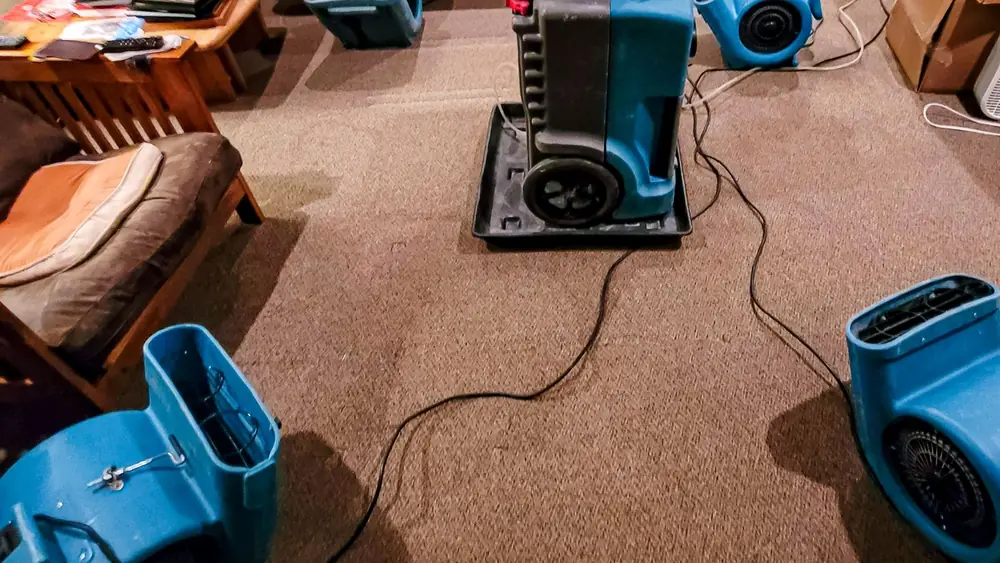
Crews then scan with moisture meters and thermal imaging cameras, because the surface can look dry while the wall behind it is not. Extraction removes the bulk, but it does not finish the job. Drying equipment such as air movers and LGR dehumidifiers takes over, which is what our water mitigation service covers.
If your home is on a slab, water can also move under flooring and trim and show up in a room away from the source. Ask the crew to check adjacent rooms and baseboards, not just the visible wet area.
Options and trade-offs
Wet vac and towels
Fine for a small, clean spill the size of a bathmat. It will not reach water in pad, subfloor or a wall cavity.
Rented extractor
Can handle a shallow room of clean water. It does not come with moisture mapping or drying equipment, and category 2 or 3 water is not a do-it-yourself job.
Professional extraction
Pumps, truck-mounted units and meters, plus a plan for drying. Costs more up front and is the right choice once water has spread beyond one room.
Waiting for it to dry
Rarely works. Time lets water spread into drywall and the structure, and an insurer may question a delay.
What shapes the cost of water removal
Price depends on the job, so we explain it in factors rather than guesses. Calling the dispatch line and describing what happened lets us tell you what applies to your situation.
| Factor | Effect on scope |
|---|---|
| Water category | Sewage or flood water needs protective gear and removal of porous materials. |
| Depth and volume | Deep water needs submersible pumps and more labor than a film on the floor. |
| Square footage | More rooms means more extraction passes and more drying equipment. |
| Materials | Carpet with pad, hardwood and tile extract differently. |
| Drying days | Extraction is the start. Equipment may run for several days afterward. |
Sudden and accidental losses are often covered, gradual leaks usually are not, and flood needs separate flood coverage. Check your policy. We explain the real number once we know the scope.
Water removal around The Colony
If the water came from the street side of the meter, report it to the city first. The Colony Water Utility is city-owned and supplies water from city wells and treated surface water purchased from Dallas Water Utilities, so a main break on the utility side is the city's to repair, and the emergency numbers above are the way in.
After removal, the next step is usually cleanup of ruined materials, which we cover on our water damage cleanup page. If you own a rental property or manage one in Lewisville, our Lewisville service page lists what we cover there.
Some of this work falls under permit rules. The Colony Building Inspections and Permits can tell you whether replacing plumbing needs a permit, so call before the walls close up.
Frequently asked questions
Is emergency water removal available at night or on weekends in The Colony?
Yes. Dispatch answers 24 hours a day, every day, and a call at 2 a.m. gets the same priority as one at noon. Same-day response is offered whenever crews are free. While you wait, stop the source and keep clear of any water near electrical equipment.
How deep does water have to be before I need pumps?
There is no single line. A shallow film can be handled with extraction units, while anything deep enough to reach outlets or fill a room needs submersible pumps. If you are unsure, call and describe it.
Should I shut off the electricity?
Only when you can get to a dry panel without wading. Otherwise step away, phone 911 or the utility, and contact us once the hazard is dealt with.
Is a burst pipe covered by insurance?
Sudden and accidental water damage, such as a burst pipe, is often covered by home and renters policies. Gradual leaks are usually excluded. Photograph the damage, keep the failed part and ask your insurer what applies.
Is emergency water removal the same as waterproofing?
No. Removal and drying fix the damage from a water event. Waterproofing is a separate construction service that tries to keep water out in the future, and we do not offer it.
What happens after the water is out?
Drying starts right away. Air movers and dehumidifiers run until readings return to the dry standard for each material, and damaged materials are cleaned out or removed. Rebuilding comes after.