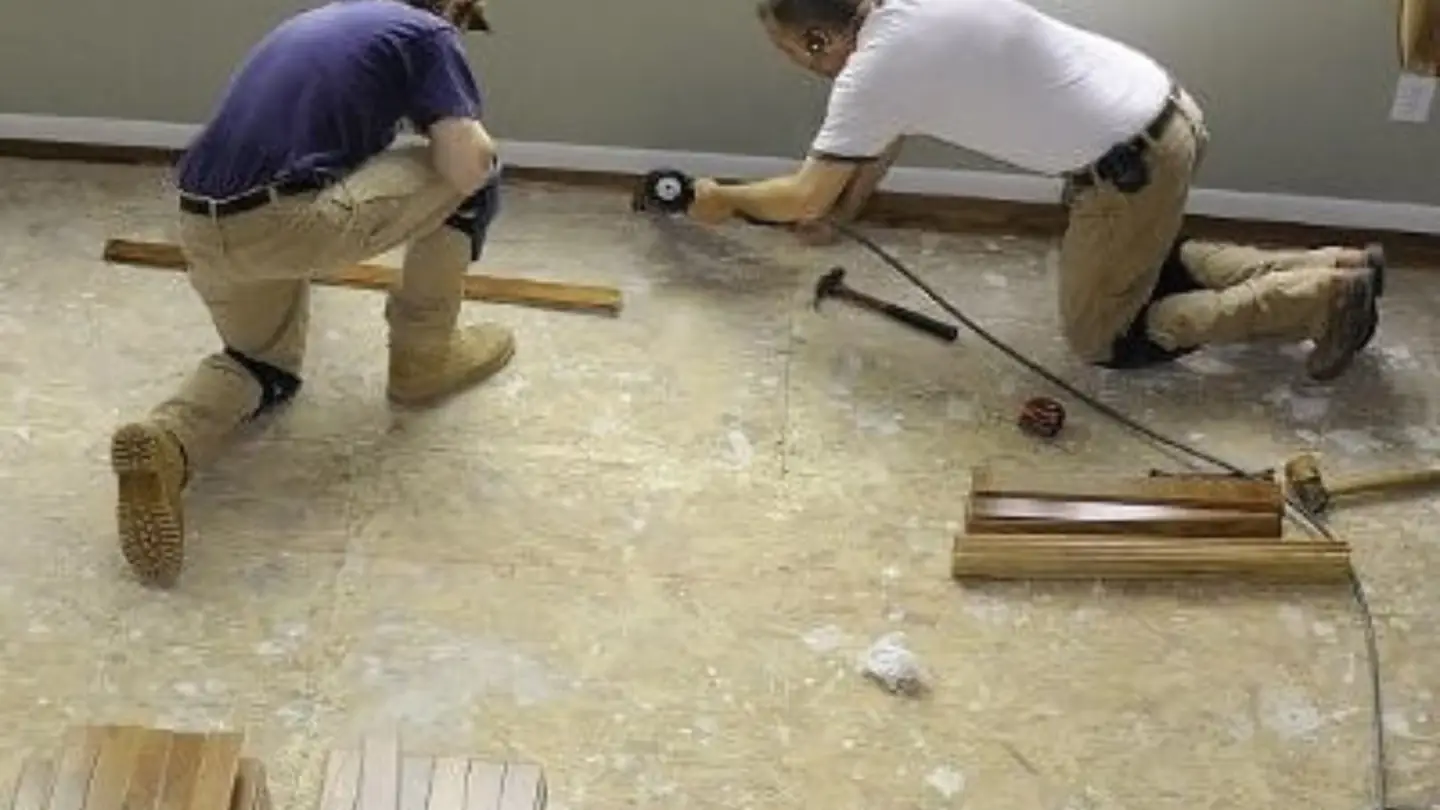
Water damage repair is the rebuild that follows drying: cutting out ruined drywall and insulation, replacing baseboard, flooring and cabinet parts, then priming and painting so the room looks like it did before the leak. In The Colony, TX, that work usually starts only after a moisture meter confirms the framing is at the dry standard for the material. Skipping that check is how new paint ends up over a wall that is still wet inside.
If water is still spreading or the structure is still wet, start with water mitigation and come back to this page when the drying is done.
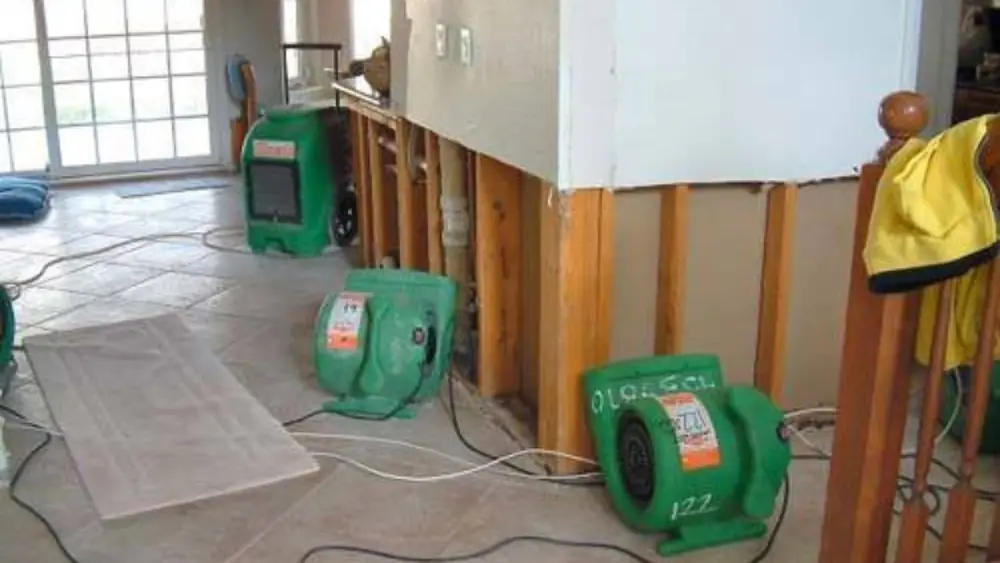
What actually breaks in Colony homes
The Colony averages 37.01 inches of precipitation a year (NWS Dallas/Fort Worth 1991 to 2020 normals), so roof and window leaks are a steady source of stained ceilings and swollen trim. Plumbing is the other big source: supply lines under sinks, toilet connections, washing machine hoses and AC condensate lines account for most of the interior damage people describe to us. A leak behind a vanity may only show as a soft cabinet floor months later.
The same weather record shows an average of 29 freezes per season. A single hard freeze can split a supply line in an attic or exterior wall, and the repair list then runs from drywall to insulation to flooring in several rooms at once. If you rent, which about four in ten Colony households do, report visible damage to your landlord in writing before anyone starts rebuilding.
Talk to dispatch
Describe what you see and we will tell you what happens next, in plain words, before any work starts.
Signs the damage is ready to rebuild, and signs it is not
Rebuilding is the right next step when the source is fixed, the area has been dried, and readings in the framing and subfloor match unaffected material nearby. The visible signs are usually obvious: bubbled paint, a drywall seam that has opened, baseboard that has pulled away, vinyl planks that no longer lock together, a cabinet toe-kick that crumbles when pressed.
Hold off if any of the following are true. A damp smell returns on humid days, a moisture meter still reads high inside the wall, or the leak has not been located and repaired. Sealing a wet cavity hides the problem and gives mold what it needs, which is why we measure first and patch second.
- Brown or yellow stain that grows after the room dries: the source is probably still active.
- Paint that blisters again after being repainted: moisture is moving through the wall.
- Soft spots in flooring near a tub, dishwasher or water heater: check the subfloor before choosing new flooring.
- Fuzzy or dark growth on drywall or baseboard: read our mold remediation page before cutting anything.
Ceiling and wall water damage repair
Ceiling damage in The Colony tends to come from three places: a roof leak after a heavy storm, an upstairs toilet or tub that overflowed, or a pinhole in a supply line running through the joists. A ceiling that has sagged, bulged or collapsed is holding water, and the weight is the danger. Keep out from under it, and let it be opened up in a controlled way.
The sequence matters. We cut out the wet or sagging drywall back to dry, solid material, remove wet insulation above it, and dry the cavity with air movers or a small dehumidifier until the meter agrees the framing is dry. Only then do we hang new board, tape, texture to match the existing finish, prime and paint.
Do not paint over wet drywall, and do not use stain-blocking primer as a shortcut on a ceiling that is still damp. The stain returns, the paper face of the board lets go, and the repair has to be done twice. Walls follow the same rule. A flood cut, which is a straight horizontal cut 2 feet or so above the floor, lets us remove soaked lower board and insulation while leaving the dry upper sheet in place.
Hardwood floor cupping: what can be saved
Cupping means the edges of each board are higher than the center, and it happens when the underside of the board absorbs more moisture than the top. Call-in questions about this are common after a slow dishwasher leak or a wet slab. Boards that are only mildly cupped and have been dried slowly, often with floor drying mats and dehumidification, frequently flatten enough to be sanded and refinished.
Boards that have crowned, buckled off the subfloor, or turned black at the seams usually cannot be saved. Water that stayed trapped for weeks does the most harm. We check board and subfloor moisture before suggesting sanding, because refinishing over a floor that is still wet will cup it all over again.
How a repair is sequenced
Order matters because each trade depends on the last one being dry and square. A typical job runs from demolition of unsalvageable material, through confirmation readings, to framing fixes, insulation, drywall, finishing, paint, trim and finally flooring.
- Confirm dryness with a moisture meter at several points, and document the readings.
- Remove damaged drywall, insulation, baseboard and flooring, and clean and treat exposed framing.
- Repair or replace damaged framing, subfloor or cabinet bases.
- Insulate, hang, tape and texture drywall to match the surrounding wall or ceiling.
- Prime, paint, install trim, then lay new flooring last so it is not damaged by the finishing trades.
Repair or replace: a decision guide by material
Not everything wet has to be torn out, and not everything that looks fine can stay. The table shows how we usually think about each material, assuming clean water (Category 1) that was dried promptly. Gray or black water changes the answer for porous items, which is why the water category comes first. See the water damage cleanup page for how those categories are handled.
| Material | Often repairable when | Usually replaced when |
|---|---|---|
| Drywall | Wet briefly, firm, and dried in place with the paint intact | Soft, crumbling, stained through, or wet for a long period |
| Fiberglass insulation | Never reliable once soaked in a wall cavity | Almost always: it holds water and loses its value |
| Baseboard and trim | Solid wood that has dried flat and can be reset and repainted | MDF that has swollen, or any piece that has delaminated |
| Hardwood flooring | Mild cupping dried slowly, then sanded and refinished | Crowned, buckled or blackened boards |
| Laminate and vinyl plank | Rarely, if the water never got under the planks | Most of the time: edges swell and locking joints fail |
| Cabinets | Solid wood or plywood boxes dried quickly, with toe-kicks replaced | Particleboard boxes that have swollen or lost their glue |
These are general trade patterns. Moisture readings and the water category on your own job decide each item.
Permits and the city
The Colony Building Inspections and Permits (6053 Main Street) requires permits for additions, alterations or repairs to existing buildings and for plumbing, electrical or mechanical work. The city's page does not mention water damage repair specifically, so a rebuild that touches wiring, plumbing lines or framing may or may not need one. Call the department and describe the scope before work starts, so a permit question does not stall the job halfway through.
If your home sits just over the line in Lewisville, the Lewisville service area page is the one to read, and the same advice applies: ask that city's building office first.
How a general estimate is built
Ask any contractor what the price is based on before you ask what it is. A repair figure that arrives by phone with no one looking at the room is a guess. Ours starts with a visit, because scope comes from what is actually damaged and what is dry.
The written scope you receive before work begins lists each room, the materials to be removed and replaced, the finish level, and what is left out. You approve it, and nothing starts until you do. If hidden damage turns up behind a wall, that is a change to the scope in writing, not a surprise on the final bill.
- Rooms and square footage involved, with photos and moisture readings.
- Materials to remove and materials to install, by grade or type.
- Finishing level: texture match, paint coats, trim profile.
- Items excluded, such as contents, appliances or structural repairs outside the loss.
- Whether a permit applies and who pulls it.
- Sequence and general timeline, without a promised finish date.
What moves the cost of repair
Insurance can complicate the order of events. Texas Department of Insurance guidance is that policies generally cover sudden and accidental water damage, while gradual leaks are usually excluded. Photograph the damage before repairs, keep damaged items for the adjuster and ask your insurer before any permanent repair begins. Call the dispatch line and we will walk through the scope for your home and explain what a real number depends on.
| Factor | How it changes the price |
|---|---|
| Area affected | More square footage of drywall, paint and flooring raises labor and materials |
| Materials chosen | Solid hardwood, custom cabinets and tile cost more than laminate or standard grade |
| Water category | Gray or black water adds removal and treatment of porous materials |
| Hidden damage | Rot in framing or subfloor found after demolition widens the scope |
| Finish and matching | Texture, paint color and stain matching take extra coats and labor |
Prices are set by your scope, so no honest number exists before someone sees the room.
Frequently asked questions
How long after drying can repairs begin?
Repairs begin once moisture readings in framing and subfloor reach the dry standard for those materials, which is confirmed with a meter rather than a calendar. For many jobs that means several days of drying first. Rebuilding earlier traps moisture inside the new materials.
Can you repair a ceiling that is sagging from a roof leak?
Yes, but the roof or plumbing source has to be fixed first. We cut out the wet board and insulation, dry the cavity, then patch, texture and paint. Keep everyone out from under a sagging ceiling until it has been opened safely.
Will a hardwood floor flatten after it cups?
Sometimes. Mild cupping often relaxes after slow, controlled drying, and the boards can then be sanded and refinished. Boards that have crowned, lifted from the subfloor or darkened at the seams usually need replacing.
Do I need a permit to repair water damage in The Colony?
It depends on the scope. Often yes, if the job reaches wiring, plumbing lines or structure. Because the city's page is silent on water damage specifically, the safest step is to phone the building department with your scope before a crew starts cutting.
Is a general estimate possible before you see the room?
Not a reliable one. Scope depends on what is wet, what is damaged and what is hidden. After a visit you get a written scope that lists rooms, materials, finish level and exclusions before any work starts.
Will insurance pay for water damage repair?
Often when the damage was sudden and accidental, such as a burst pipe or an overflowing toilet. Gradual leaks and flood are commonly excluded. Check your policy and ask your insurer, and photograph everything before repairs.