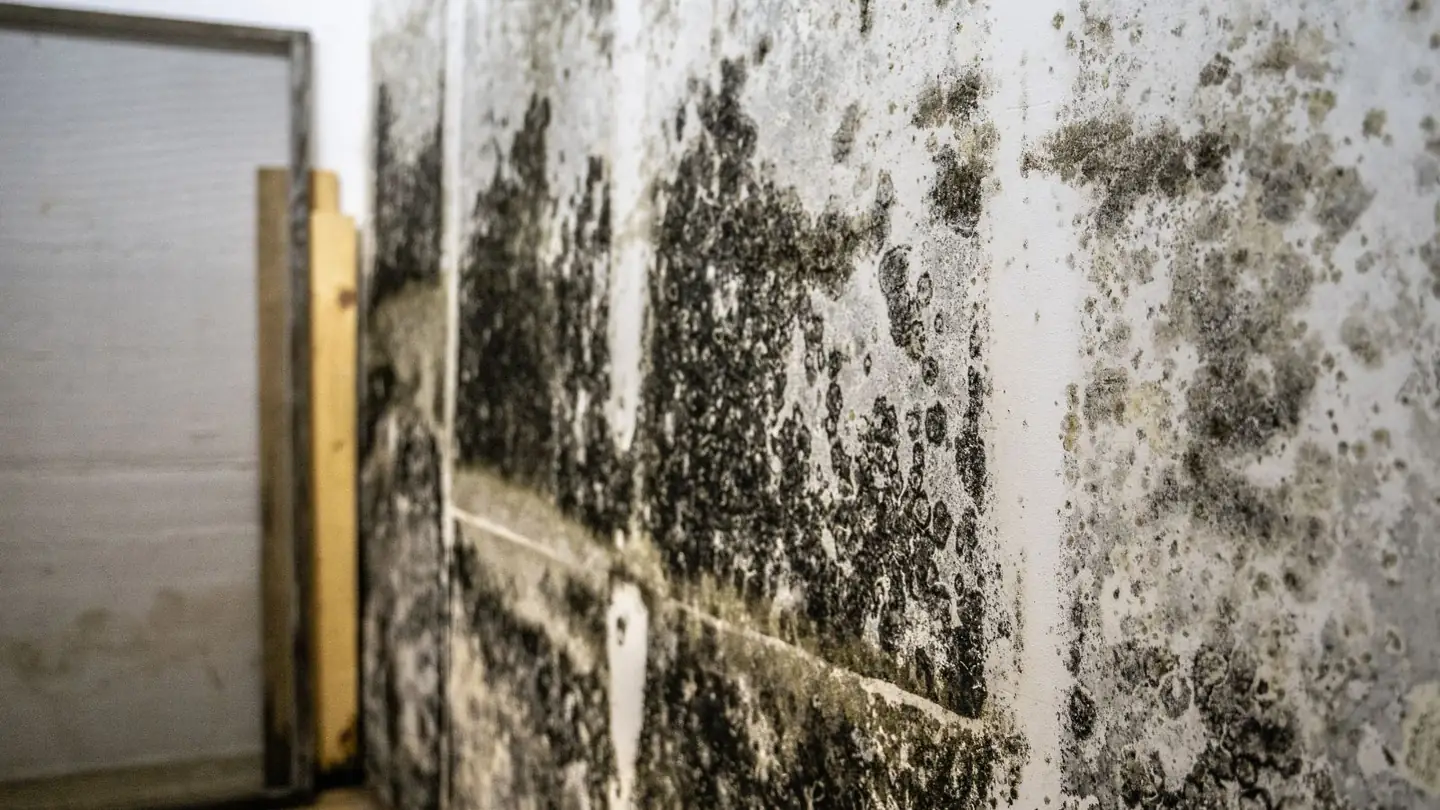
Can you tell black mold from mildew by color?
Not reliably. Many molds look dark green, brown, gray or black, and the same species can look different depending on the surface, the moisture and how long it has grown. Mildew is a casual term, often used for flat gray or white growth, but it is not a precise category you can sort by eye.
That means a black patch could be many things, including dirt, soot, old water staining or several kinds of mold. The only way to name what is growing is laboratory analysis of a sample, and even then the result says what was present in that sample, not what is safe or unsafe for your household.
What people usually mean by black mold
The phrase is popular shorthand for dark mold growth, and it carries a lot of fear. We are a restoration network, not a medical or testing authority, so this page does not diagnose anything or make claims about how mold affects anyone. If you or a family member has health questions about a home, talk to a physician.
What a restoration crew can tell you is practical: whether there is visible growth, how far moisture has spread, which materials are involved, and what has to be dried, cleaned or removed. Those facts drive the plan more than the color does.
Talk to dispatch
Describe what you see and we will tell you what happens next, in plain words, before any work starts.
What testing can and cannot do
| Question | What testing can help with | What it cannot do |
|---|---|---|
| Is there mold here? | Sampling can confirm growth in a specific place | It cannot show every hidden area |
| What kind is it? | A lab can name organisms in a sample | It cannot rank a house as safe or dangerous |
| How big is the problem? | An assessor can survey with moisture meters and visual inspection | A single swab cannot measure the whole home |
| Did cleanup work? | A post-remediation assessment by a licensed assessor | A remediator cannot clear their own job |
| Should I treat it differently? | A written protocol sets scope and containment | The color of the growth does not change the protocol |
Testing informs a plan. It does not replace one.
Steps to take when you find dark growth
- Find and stop the water source. Mold needs moisture, so a leak, condensation or damp insulation is usually nearby.
- Do not disturb it. No scrubbing large areas, no sanding, no running fans across it.
- Photograph it with a ruler or tape measure in the frame so size is clear.
- Estimate the area. Under 25 contiguous square feet of visible mold, an owner can clean it under Texas rules. At 25 or more, a licensed remediator is required.
- Check your insurance policy before ordering testing, since many policies exclude it.
- If the size is unclear or it sits inside walls, have a licensed assessor look first.
What a good written assessment should contain
A licensed assessor's work ends in a written protocol. It should say where the growth is, how large the affected area is, what moisture readings were taken, which materials need removal or cleaning, and what containment and air filtration the remediator should use. Vague promises on a quote are not a protocol.
Ask to see the document before anyone starts. If the scope is a single line and a total, you have no way to check the work later, and clearance has nothing to measure against. A real protocol also names what the post-remediation assessor will look for.
What not to do
- Do not spray the area with random products and paint over it.
- Do not cut into drywall without containment.
- Do not run a box fan or the HVAC across visible growth.
- Do not assume a clean-looking wall is dry, since moisture can sit behind it.
- Do not throw away damaged materials before photographing them.
Why the assessor and remediator stay separate
The Texas Department of Licensing and Regulation generally does not let one person both assess and remediate a project. The reason is plain. If the same company writes the scope, does the job and then declares it finished, no one is checking the work. Only a licensed remediator can issue the Certificate of Mold Damage Remediation, and clearance needs a licensed assessor who did not write the protocol.
For a homeowner, that means two bids and two licenses to verify. Ask each for its Texas license number, and compare the scope in writing before work begins. Our mold remediation page describes what a licensed project involves.
When water caused it
Most visible mold we hear about in this area traces to a water event, such as a roof leak, an AC condensate line, a washing machine valve or a slow plumbing drip. When the water source is part of the story, drying matters as much as the cleaning. Our water damage cleanup work covers extraction and drying of wet materials, using moisture meters, air movers and dehumidifiers until readings are back in the dry range.
Our network's crews are licensed and insured restoration professionals. Ask any company, including us, for its Texas license before work starts, and whether its crews work to ANSI/IICRC S520. The Carrollton and Plano pages cover neighboring service areas.
Local note
Insurance and licensing for mold in Texas
Before paying for testing or cleanup, read your policy. Texas Department of Insurance guidance on hidden water damage says mold cleanup and testing generally are not covered unless coverage was added. Report any water damage within days of first seeing it, photograph before repairs, and keep the affected materials for the adjuster.
The same guidance adds that anyone doing mold work professionally needs a state license and has to supply a certificate. In Texas, the assessor and the remediator are generally separate: one writes the protocol, the other does the work, and clearance comes from an assessor who did not write the protocol. If a company offers to test and remove for you in one package, ask how that fits the licensing rules.
Frequently asked questions
How can I tell black mold from mildew?
You cannot reliably do it by color. Mold and mildew vary in appearance with the surface and moisture, so only sampling by a qualified party can identify what is growing.
Is every black spot on a wall mold?
No. Soot, dirt, old stains and other materials can look the same. A moisture reading and a close inspection help separate them.
Should I have black mold tested?
Testing can help document and plan, but it does not change the need to fix the moisture. Check your policy first, because many exclude testing.
Can I clean dark mold myself?
Under Texas rules an owner may clean visible mold under 25 contiguous square feet. Larger areas need a licensed remediator, and hidden growth is best assessed first.
Does a mold certificate matter when selling a home in The Colony?
Buyers and lenders sometimes ask for documentation. In Texas, only a licensed remediator issues the Certificate of Mold Damage Remediation, after clearance by an assessor.
What about health concerns from mold at home?
Those are medical questions, so talk to a physician. Our role is the building side: finding the water and doing the drying and remediation work.