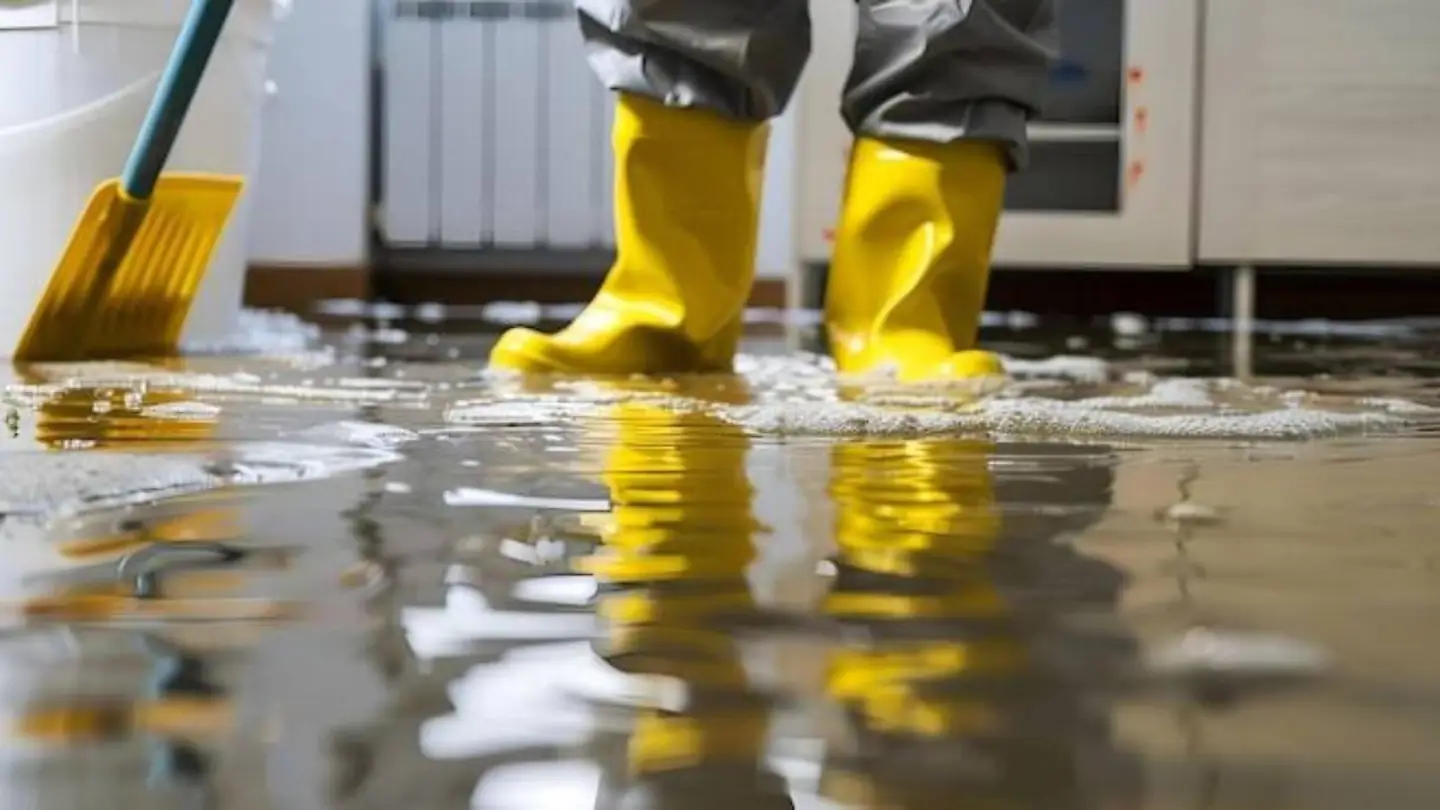
If water has entered your house from the yard, the street or a drainage channel, treat it as contaminated until a professional says otherwise. Do not wade through it, do not run a household vacuum on it, and do not wait for it to drain on its own. Flood water carries soil, fuel, bacteria and sewage, and it soaks into drywall, insulation and flooring faster than most people expect.
Flood water cleanup in The Colony, TX follows the same order each time: make the building safe, remove the water, strip out what cannot be saved, dry the structure and then rebuild. The sections below cover how to sort your situation, what to do in the first hours and what to ask before anyone starts work.
Sorting water into three categories
The trade standard ANSI/IICRC S500 groups water by how contaminated it is at the source, then by how long it has sat. Outside water from a storm surge, a swollen creek or overland runoff almost always lands in Category 3. A supply line that burst this morning is a different animal.
| Category | Common name | Typical source | What it means for cleanup |
|---|---|---|---|
| 1 | Clean | Broken supply line, tub overflow, a failed ice maker line | Dry in place if caught early. Porous materials may stay. |
| 2 | Gray | Washing machine discharge, dishwasher overflow, sump pump failure | Extraction, then removal of wet carpet pad and often baseboards. |
| 3 | Black | Storm runoff, rising lake or creek water, sewage backup | Removal of porous materials, cleaning and antimicrobial treatment of what stays. |
Categories can worsen with time. Clean water that sits for days can slide toward Category 2, which is one reason to call early.
Talk to dispatch
Describe what you see and we will tell you what happens next, in plain words, before any work starts.
The first hours: a short order of operations
Safety comes before salvage. Photograph first if you can do it from dry ground, then work through the list below.
- Stay out of any room where water touches outlets, appliances or the electrical panel.
- If you can reach the main water valve safely, close it, so that a broken line is not adding to runoff.
- Photograph the waterline on walls, the affected rooms and any damaged belongings before moving things.
- Lift small valuables, papers and medications to a dry surface, using boots and gloves.
- Keep children and pets out of the water and away from fans or hoses.
- Call the dispatch line so a crew can bring pumps and extractors and start the assessment.
Safety: electrical and sewage
Never stand in water near a panel, outlet or plugged-in appliance. Shut off power at the panel only when it is dry and reachable without wading. If you see sparks, smell gas or cannot tell whether power is live, leave the house and call 911 or the utility before calling the restoration line.
If the water smells of sewage or came up through a floor drain, treat every wet surface as contaminated. Wear boots, gloves and eye protection, wash up afterward, and do not run the HVAC system until the area is assessed.
Flood is not what most policies cover
The Texas Department of Insurance says most home and renters policies do not cover flood, though a few do. Water from a burst pipe is usually treated as sudden and accidental, while rising water from outside generally needs a separate flood policy. Read your declarations page before you assume either way.
If you do carry a National Flood Insurance Program policy, a claim must be filed within 60 days. For any other policy, the state guidance is to call your insurer as soon as possible. Insurers may also push back if you let damage worsen, so shutting off water and starting drying promptly helps your position. Keep receipts for any temporary protection, and do not do permanent repairs until the adjuster has seen the damage.
What professional cleanup actually involves
A crew starts with moisture meters and a thermal imaging camera to find where water has traveled behind finishes. Standing water comes out with submersible pumps and truck-mounted or portable extraction units. Then comes the removal step that surprises many homeowners: wet drywall, insulation and carpet pad touched by Category 3 water are usually cut out rather than dried.
What stays gets cleaned and treated with antimicrobial products, and drying begins with air movers and LGR or desiccant dehumidifiers. Readings are checked daily and equipment comes off only when the material returns to its dry standard. Our flood damage restoration page covers the full sequence, and water damage cleanup explains the sanitizing phase in more depth.
Questions to ask before work starts
- Which water category does the crew believe this is, and how did they decide?
- What will be removed and what will be dried in place?
- Do the crews work to ANSI/IICRC S500, and will drying readings be documented?
- Who handles the rebuild, and will the scope be written down?
- Does any of the work need a city permit?
Local note
The Colony: storm water, drainageways and the lake
The city's Storm Water Utility maintains streets, alleys, sidewalks, storm water and drainageways, so a blocked channel or inlet near your home is a report for the city rather than a private fix. The city also publishes a Storm Water Management Program for 2025 to 2029. If you are unsure whether your lot sits in a mapped floodplain, look your address up on the FEMA flood map and put the question to the Engineering department, which takes floodplain questions.
Lewisville Lake gives the city about 23 miles of shoreline inside its limits, and the dam began collecting water in 1954. Homes near Stewart Creek Park, Hidden Cove Park and Marina or the old Eastvale area on the eastern shore are the ones most worth checking against the flood map. Knowing your status before a storm tells you whether you need flood coverage added, since a claim after the fact is too late.
Frequently asked questions
Is storm runoff in my house always Category 3?
Usually, yes. Water that has crossed yards, streets or drainage channels picks up soil and contaminants, so it is treated as Category 3 under S500. A professional may confirm this on site, but plan for removal of porous materials it touched.
Can I use a wet vac to remove it myself?
For a small amount of clean water, a shop vacuum can help. For flood water, it is a poor idea because the machine can spread contaminants and the water often soaks into walls where you cannot reach it. Pumps and extractors do the job faster and with less cross-contamination.
How long do I have to file a flood claim?
The Texas Department of Insurance says claims under a National Flood Insurance Program policy must be filed within 60 days. Other policies vary, and the guidance is to call as soon as possible. Check your own policy for exact deadlines.
Do I need a permit to repair after a flood?
Frequently, because flood rebuilds tend to involve walls, wiring or plumbing. The city does not list water damage repair by name, so check with The Colony Building Inspections before the rebuild begins.
Who do I call about a blocked drainageway near my street in The Colony?
Call the city's Storm Water Utility through Engineering, since it maintains storm water and drainageways. A restoration company can dry your house, but only the city can clear a public channel.
Do you serve areas near The Colony too?
Yes. Crews also cover Lewisville and Little Elm, both on the lake, so lake-area runoff calls are familiar territory.