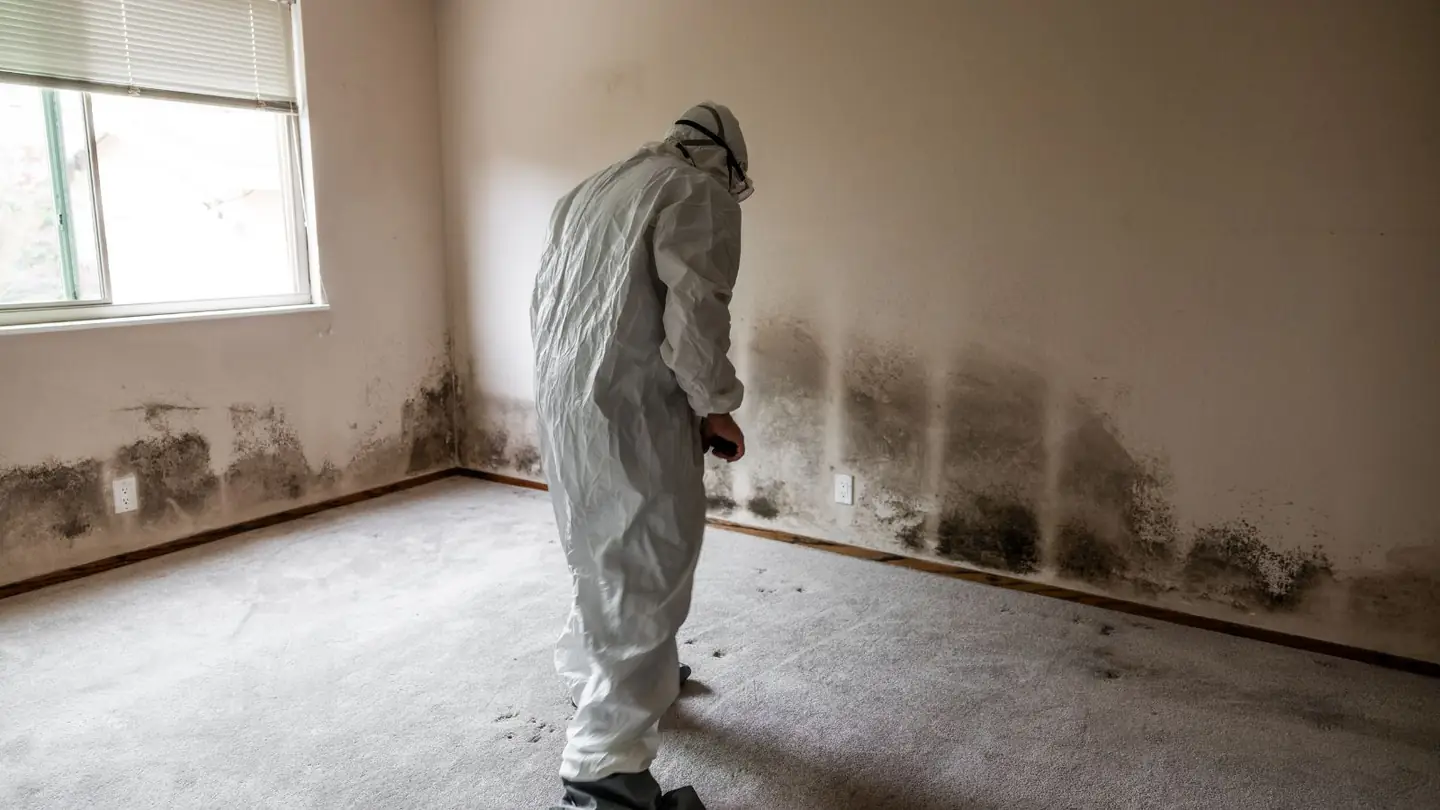
Why below-grade rooms hold moisture
Walls and floors that sit against soil are in constant contact with ground moisture. Concrete is porous, and a basement slab can pass water vapor upward even when no liquid water is visible. Add cool surfaces and warm humid air, and condensation forms on block walls, ductwork and cold water pipes.
Three sources account for most below-grade mold: liquid water from outside (grading, gutters, a high water table after heavy rain), plumbing or appliance leaks inside the room, and humidity that nobody is removing. Each calls for a different fix, so naming the source is step one.
A quick moisture check before anyone prices the job
- Look at the exterior first: do downspouts empty near the wall, does soil slope toward the house, are window wells holding water?
- Check indoor plumbing: water heater base, washer connections, a floor drain, a sump pump if there is one, and any utility sink.
- Tape a square of plastic sheeting to a bare wall for a couple of days. Moisture under the sheet points to the wall. Moisture on the room-side face points to indoor humidity.
- Read a hygrometer in the room across a few days. A stubbornly high reading means humidity control is part of the answer.
- Photograph everything with a ruler or a tape measure for scale, since size decides which Texas rule applies.
Talk to dispatch
Describe what you see and we will tell you what happens next, in plain words, before any work starts.
What happens under Texas mold rules
For basement mold, the state threshold comes from the Department of Licensing and Regulation. Visible growth of 25 contiguous square feet or more in a covered home goes to a state-licensed mold remediator, while a smaller area may be cleaned by an owner or maintenance staff.
A second rule matters when you hire. Texas generally keeps the assessor and the remediator as two different people on one project. Only the licensed remediator issues the Certificate of Mold Damage Remediation, and the post-remediation check must come from a licensed assessor other than the protocol's author.
How professionals handle a below-grade job
Work starts with moisture mapping: moisture meters on walls and slab, and a thermal imaging camera to see cold, wet areas behind finishes. Containment barriers and negative air machines keep disturbed material from reaching upstairs rooms, and HEPA air scrubbers clean the air during removal.
Porous materials that stay wet, such as drywall, insulation and carpet, are typically removed. Hard surfaces can often be cleaned and treated with antimicrobial products. Professional mold remediation is typically done to ANSI/IICRC S520, and you can ask any company if its crews work to it.
When the cause is standing water, not humidity
If water has entered the room from outside or from a failed line, the response has to start with extraction and drying, not mold removal. Flood damage restoration crews use submersible pumps, truck-mounted extraction and dehumidification to bring the space back to a dry standard. Sewage backing up from a floor drain is a separate hazard, so stay away from it and call a professional.
Be aware that flood and flood-caused mold are usually excluded from home and renters policies and need separate flood coverage. If you have an NFIP flood policy, claims must be filed within 60 days.
Restoration is not waterproofing
Drying a basement and removing mold restores the space to its pre-loss condition. It does not stop groundwater from coming back, and it is not a waterproofing system. Waterproofing, grading changes, drainage work and foundation repair are separate trades.
If you see repeat moisture after drying, plan for a drainage or foundation contractor. Be cautious about any company that promises mold will never return. Mold needs moisture, and the only durable approach is to remove the moisture source.
Keeping the room dry afterward
After cleanup, the space only stays clean if the moisture load drops. A standalone dehumidifier sized for the room, gutters that discharge away from the foundation, and a sump pump that is tested before storm season all help. Check the room again after the next heavy rain, looking at wall bases, the slab edge and window wells.
Store boxes off the floor on shelves and leave a gap between furniture and exterior walls so air can move. Cardboard on a damp slab is a common place for mold to start again, because paper is an easy food source.
Hiring: three questions to ask
Neighbors in Frisco and Plano ask the same questions, especially before a home sale when a buyer or lender wants clearance paperwork.
- Does the remediator hold the Texas license, and will a Certificate of Mold Damage Remediation be issued at the end?
- Who will do the independent assessment and clearance, and how do you keep that role separate from the remediation?
- What will be done about the moisture source, and who is responsible for that part?
Local note
Lowest floors, floodplain rules and the lake
The Colony's floodplain development permit rule (city code Sec. 9.5-22) requires new residential lowest floors, including basements and garages, to sit at or above the set minimum finished floor elevation. It also requires the 100-year base flood elevation and an elevation certificate. If you are building or modifying a below-grade space, ask the city before you start, and check the FEMA flood map for your address.
Lewisville Lake is a defining feature here. The dam began collecting water in 1954, and the city counts about 23 miles of shoreline within its limits. Lakeside lots have different groundwater and drainage conditions, so a below-grade room near the shore deserves a drainage check by a qualified contractor.
Frequently asked questions
Are basements common in The Colony?
We do not claim they are. We have no local count to share, but some properties have a basement, walkout or sunken room. If yours does, the guidance above applies.
Can I clean basement mold myself?
Texas rules let an owner or maintenance staff clean visible mold that covers less than 25 contiguous square feet. Beyond that, a state-licensed remediator must do the work. Fix the moisture source first either way.
Will remediation stop my basement from getting wet again?
No. Restoration cleans and dries what was damaged. It is not waterproofing, so recurring moisture needs a drainage, grading or foundation contractor.
Does insurance cover basement mold?
Often not. Most policies exclude mold cleanup and testing unless coverage was added, and flood-caused mold needs a flood policy. The Texas Department of Insurance advises reporting hidden damage quickly, so ask your insurer.
Can one company assess and remove the mold?
Generally not on the same project. A licensed assessor writes the protocol and later clears the space, while a licensed remediator performs the work and issues the certificate.
Do I need a permit for work on a below-grade room in The Colony?
Possibly. The city asks for permits when you add to, alter or repair an existing building or touch plumbing or electrical systems, and it has a separate floodplain permit rule. Call Building Inspections and Permits to ask about your specific work.