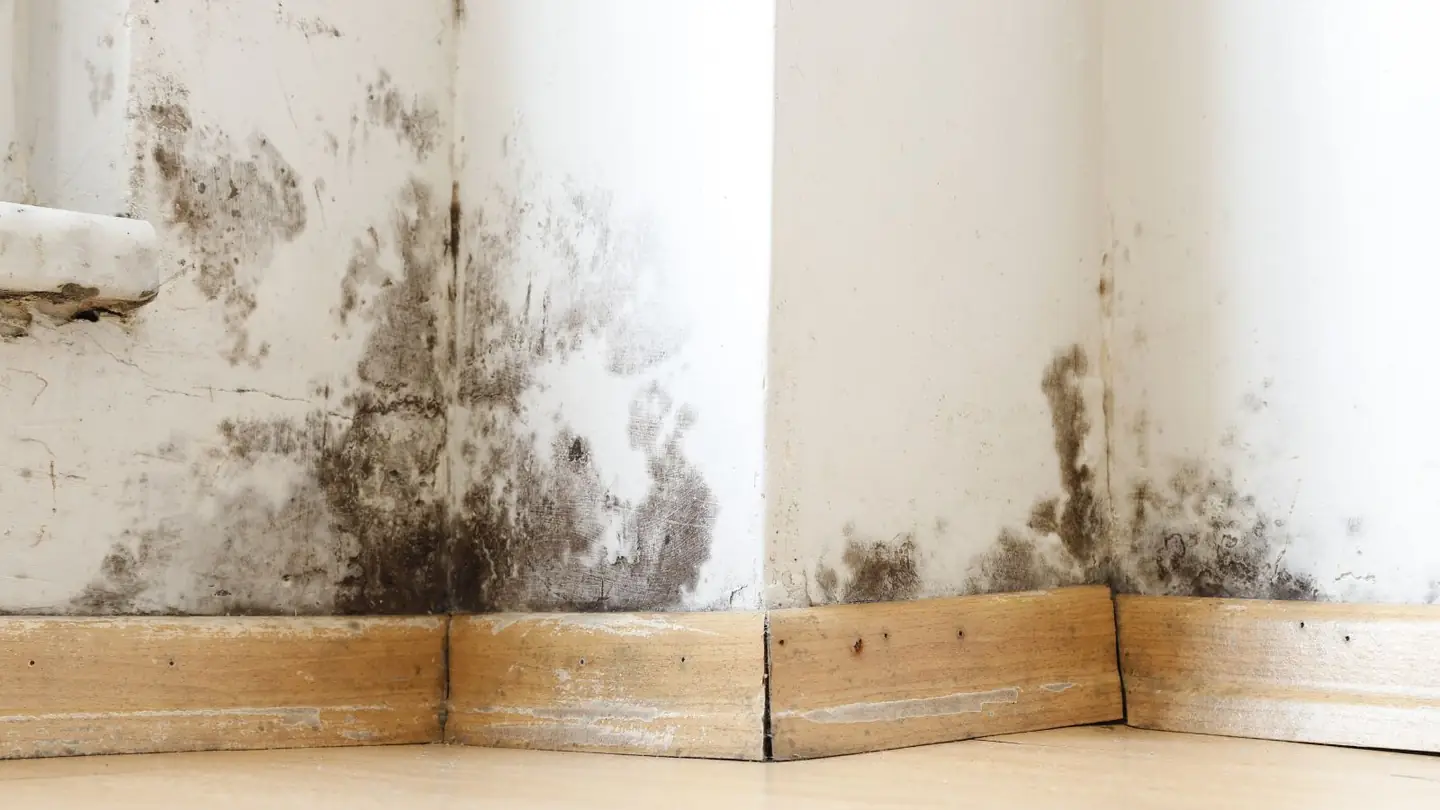
Fix the moisture before you touch the mold
Mold needs moisture to grow, and wood that keeps getting wet will grow it again after any cleaning. Find the source first: a roof leak, a sweating AC condensate line, a dripping supply fitting, a crawl space that stays damp. Fix it, then dry the wood with air movers and a dehumidifier until a moisture meter reads in the dry range.
Skipping this step is the most common reason cleaned wood gets fuzzy again. Cleaning removes growth that is already there. It does nothing about the conditions that fed it.
Surface growth or deep growth
Mold on a sealed or finished surface, such as a painted shelf or varnished trim, mostly sits on top. Raw lumber is different. Framing, plywood and unfinished beams are porous, and growth can follow the grain below the visible stain.
A quick way to judge is to look at the wood once it is dry. If a stain wipes away and the grain beneath is clean and firm, the growth was probably on the surface. If a dark stain stays after cleaning, or the wood feels soft, the problem likely goes deeper.
Talk to dispatch
Describe what you see and we will tell you what happens next, in plain words, before any work starts.
Small patch or bigger problem
| Situation | Small surface patch | Larger or hidden growth |
|---|---|---|
| Size | Well under 25 contiguous square feet | 25 square feet or more, or you cannot tell how far it goes |
| Location | Open surface you can see and reach | Inside walls, under flooring, above ceilings, in HVAC areas |
| Wood condition | Firm and sound after drying | Soft, crumbling, or stained through |
| Moisture source | Found and already fixed | Unknown or ongoing |
| Who handles it | Owner or maintenance staff may clean it | State-licensed remediator, with separate assessor where the rules require |
| Next step | Clean, dry, monitor | Stop, avoid disturbing it, and get it assessed |
When in doubt, treat it as larger. Disturbing hidden growth by cutting or sanding can spread dust around the house.
What cleaning can and cannot do
Cleaning can remove visible growth from the surface of sound wood. HEPA vacuuming, damp wiping with a detergent solution and careful sanding of light staining are common steps. Cleaning products vary widely, so read the label on any product you use, follow its ventilation and mixing directions, and never combine products.
What cleaning cannot do is rebuild wood that has been broken down by long moisture exposure, and it cannot reach growth that is inside the cell structure of porous lumber. Professional crews use HEPA air scrubbers, containment barriers and antimicrobial treatments, and they follow ANSI/IICRC S520, which is the published mold remediation standard. It is fair to ask any company whether its crews do.
Where mold on wood shows up in local homes
Attic roof decking under a slow roof leak, plywood sheathing near a failed window flashing, the underside of a kitchen sink cabinet, a garage wall behind a water heater, and the joists above a damp crawl space are the usual suspects. Each has a different fix. Decking and sheathing often mean a roofer or window repair first, while cabinet bases point to a supply line or a drain.
Check these spots after any storm or plumbing repair. A flashlight and a moisture meter turn a hunch into a reading, and a thermal imaging camera can show cool, damp zones behind finished surfaces. Catching damp wood early keeps the job under the 25 square foot line.
When the wood has to be replaced
- It is soft, spongy, or crumbles when probed with a screwdriver.
- Staining stays after cleaning and drying.
- It is plywood or OSB with delaminated layers.
- It is a structural member that has lost strength, which also calls for an evaluation of the framing.
- The area is large enough that cutting it out is cleaner than trying to treat it.
A basic cleanup sequence for a small patch
- Stop the water and dry the area fully.
- Close off the room and keep air handlers from pulling through it.
- Wear a fitted respirator, gloves and eye protection.
- HEPA vacuum the surface, then wipe with a cleaner chosen from the product label.
- Dry again and check the wood with a moisture meter.
- Seal or prime only after the wood is dry, and recheck it over the next few weeks.
Insurance and getting it assessed
Texas Department of Insurance guidance says a mold professional must be state-licensed and provide a certificate, and that paying for mold cleanup or testing is usually off the table unless the policy was extended to include it. Mold from a gradual leak is also commonly excluded. Read your policy before you spend money on testing.
Our network's crews are licensed and insured restoration professionals who handle the drying and rebuild side, and our mold remediation page explains how a licensed job works. If water caused the growth, our water damage repair team can handle the dry-out and the carpentry afterward. Homes in Frisco and Lewisville are served the same way.
Local note
The 25 square foot line in Texas and The Colony
The state mold program is run by the Texas Department of Licensing and Regulation. Once visible growth in a covered home spans a patch of 25 contiguous square feet or larger, a state-licensed mold remediator has to take over. A smaller patch can be cleaned by the owner or a maintenance worker, and a licensed contractor on a small job is not exempt from the law.
That line decides who does the work, and it is also where a second rule kicks in. TDLR generally keeps assessment and remediation apart, so one person cannot normally handle both on a single project. So if your garage framing or attic decking is past the threshold, plan for two separate licensed parties instead of one company that tests and cleans its own work.
Frequently asked questions
Can you remove mold from wood?
Surface growth on sound, dry wood can often be cleaned. Growth that has penetrated raw lumber, or wood that has turned soft, usually means replacement.
What kills mold on wood?
Cleaning products vary in what they claim and how they should be used, so read the label and follow its directions. Whatever you use, drying the wood and fixing the moisture source matter more than the product.
Can I sand mold off wood?
Light staining on sound wood can be sanded, but sanding raises dust, so contain the area and wear a fitted respirator. Do not sand large or hidden growth.
Is wood with mold stains always ruined?
No. A stain can remain after the growth is gone. Probe the wood. If it is firm after drying, it may be fine, and if it is soft, it should come out.
Do I need a licensed professional in The Colony for mold on wood?
Yes, once the growth reaches 25 contiguous square feet, since state rules then call for a licensed remediator in a covered home. Smaller areas may be cleaned by the owner.
Will mold come back after I clean it?
It can if the wood gets wet again. Mold needs moisture, so find and fix the source, then keep the area dry and check it periodically.