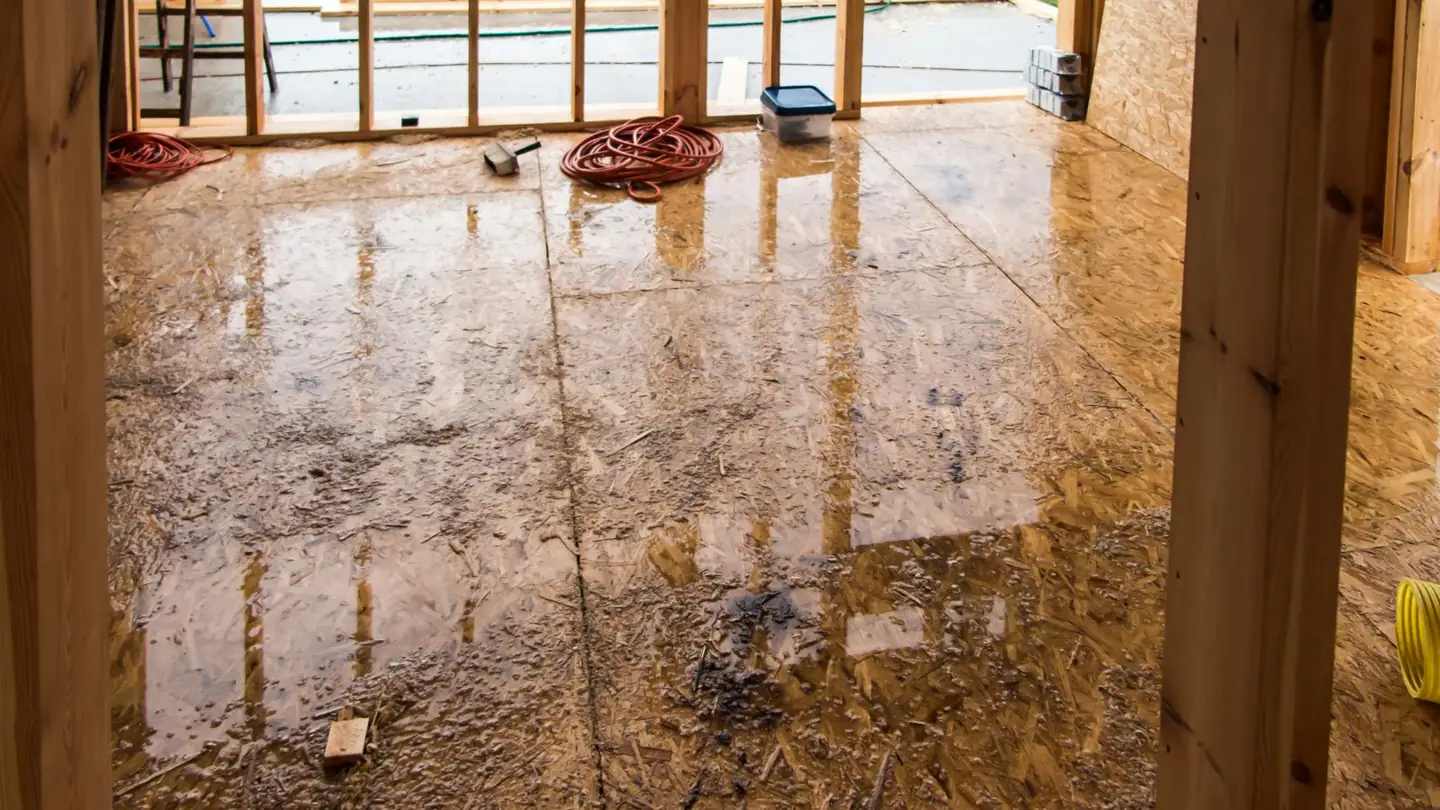
Start with moisture, not sandpaper
Wood that is still wet cannot be repaired. Paint, filler and sealer applied over damp fibers trap moisture, and the finish will bubble or peel within weeks. The first job is stopping the source, then drying the wood until a moisture meter shows readings back at the dry standard for that material.
Drying is slower than people expect. Hardwood floors, thick framing and cabinet boxes hold water deep inside, and a surface that feels dry to the hand can still read high on a pin or pinless meter. Air movers and LGR dehumidifiers do the heavy work, and a water mitigation crew will keep taking readings until the numbers stop falling.
How to tell repairable wood from ruined wood
Once the wood is dry, press the tip of a screwdriver or an awl into it. Sound wood resists and splinters in long fibers. Rotted wood feels spongy, crumbles, or lets the tool sink in with almost no effort. Dark staining alone is not rot, so test the area rather than judging by color.
Look for the other signs too: swelling at joints, cupped or crowned boards, warped cabinet panels, soft baseboard ends, and a musty smell that stays after drying. If you see fuzzy growth, treat that as a separate problem and read up on mold before you sand anything, because sanding spreads dust.
Talk to dispatch
Describe what you see and we will tell you what happens next, in plain words, before any work starts.
Which repair fits which piece of wood
| Item | Usual damage | Repair that often works | When to replace |
|---|---|---|---|
| Wall framing (studs, plates) | Staining, surface swelling, or soft rot at the base | Dry, clean, and treat if sound | Soft or crumbling wood, or any section that carries load |
| Floor joists and subfloor | Sagging, delamination of plywood or OSB | Dry in place if firm | Delaminated panels, springy spans, rot at the joist ends |
| Trim and baseboard | Swelling, paint failure, soft bottom edge | Sand, fill, repaint after drying | Soft or split pieces, since trim is cheap to swap |
| Cabinets | Swollen particleboard, warped doors, loose bases | Solid wood doors can be dried and refinished | Swollen particleboard boxes rarely recover |
| Furniture | Cupping, white rings, lifted veneer | Dry slowly, then re-glue or refinish | Water-swollen composite or heavy veneer loss |
A table is a starting point. Thickness, species and how long the wood stayed wet change the answer.
The repair steps in order
- Stop the source and remove standing water and wet materials such as soaked insulation or carpet padding.
- Dry the wood with air movers and dehumidifiers, checking with a moisture meter until readings level out at the dry standard.
- Probe for rot with an awl, mark the soft areas, and photograph them before any work starts.
- Sand away raised grain and old finish on sound surfaces, using a dust-controlled sander and wearing a fitted respirator.
- Consolidate lightly damaged wood with a penetrating wood hardener, then fill voids with a two-part epoxy filler rated for wood.
- Cut out and replace anything that fails the awl test, matching the species and thickness, then prime every cut face before closing it up.
Consolidating versus replacing
Consolidants are liquid resins that soak into soft fibers and harden them. They suit small patches of surface softness on trim, window sills or furniture legs. They do not rebuild wood that has lost its structure, and they should never be used to patch a beam, joist or header that holds weight.
Replacement is the honest answer more often than people want. A new piece of baseboard is a small job. A new section of subfloor is a bigger one, and the cost swings with square footage, the material, how many layers sit above it, and whether finish flooring has to come up first.
When framing means calling a pro
Structural framing is where do-it-yourself stops. If a stud wall bows, a joist bounces underfoot, a beam end is soft, or a floor sags in the middle of a room, stop and have it evaluated. Sistering a joist or shoring a header is work that needs the right fasteners, the right lumber and often a permit.
Call a restoration professional when water has been in contact with framing for more than a day or two, when the loss involved sewage or river water, or when wet wood sits behind finished walls you cannot see into. A crew can open the wall, dry and repair the structure, and tell you what must be rebuilt.
Mistakes that cost the most
- Painting or sealing before the moisture meter reads dry.
- Heating a room with space heaters to dry wood fast, which can split hardwood and crack finishes.
- Filling soft wood with putty instead of cutting it out.
- Sanding visible mold growth without containment.
- Skipping photos, since an insurer or contractor may want to see the damage before it is covered up.
Insurance and where to get help nearby
Texas Department of Insurance guidance says to photograph damage before repairs and keep receipts for temporary repairs. A burst pipe is the kind of sudden, accidental loss that is often covered, while a slow leak that rotted a cabinet base over months often is not. Check your policy and ask your insurer before permanent repairs begin.
Our network of licensed and insured restoration professionals handles both the drying and the rebuild. If you live closer to the Frisco side, our Frisco restoration page covers that area, and the Lewisville page does the same across the lake.
Local note
Repairs and permits in The Colony
The Colony Building Inspections and Permits office, at 6053 Main Street, says permits are required for additions, alterations or repairs to existing buildings, and to plumbing, electrical and mechanical systems. Water damage repair is not spelled out on the department's page. So before you cut out a wet subfloor or swap a run of studs, call the office and ask what applies to your job.
That one phone call matters most for anything structural. A contractor who works in town should already know the answer, and the city also keeps a contractor registration page you can check. Older homes near the Eastvale side of Lewisville Lake, which began in the early 1960s as a cottage and retirement community, may have framing and finishes that differ from newer subdivisions. A quick look by someone who has opened those walls is worth asking for.
Frequently asked questions
Can water damaged wood be repaired?
Often yes, if it dried before rot set in and still passes a probe test. Wood that stays spongy or crumbles after drying needs to be replaced rather than patched.
How long does wood take to dry after a leak?
It depends on species, thickness, how long it stayed wet and the equipment on site. Drying continues until moisture readings return to the dry standard for that material, which can be days for framing and longer for dense hardwood.
Can I just paint over water stained wood?
Only after it is dry and sound. Stain-blocking primer can cover marks, but paint over damp or soft wood hides the problem and tends to fail.
Do I need a permit to repair water damaged framing in The Colony?
The city says permits are required for repairs to existing buildings. Because its page does not address water damage specifically, call Building Inspections and Permits at City Hall and ask whether your repair needs one.
Is it cheaper to replace trim or repair it?
For baseboard and casing, replacement is usually simpler. For a long run of detailed historic trim, careful repair may be worth the extra labor. Material, length and finish drive the difference.
Can I keep a swollen kitchen cabinet?
Solid wood doors and frames sometimes recover after slow drying. Cabinet boxes made of particleboard usually swell permanently and are normally replaced.