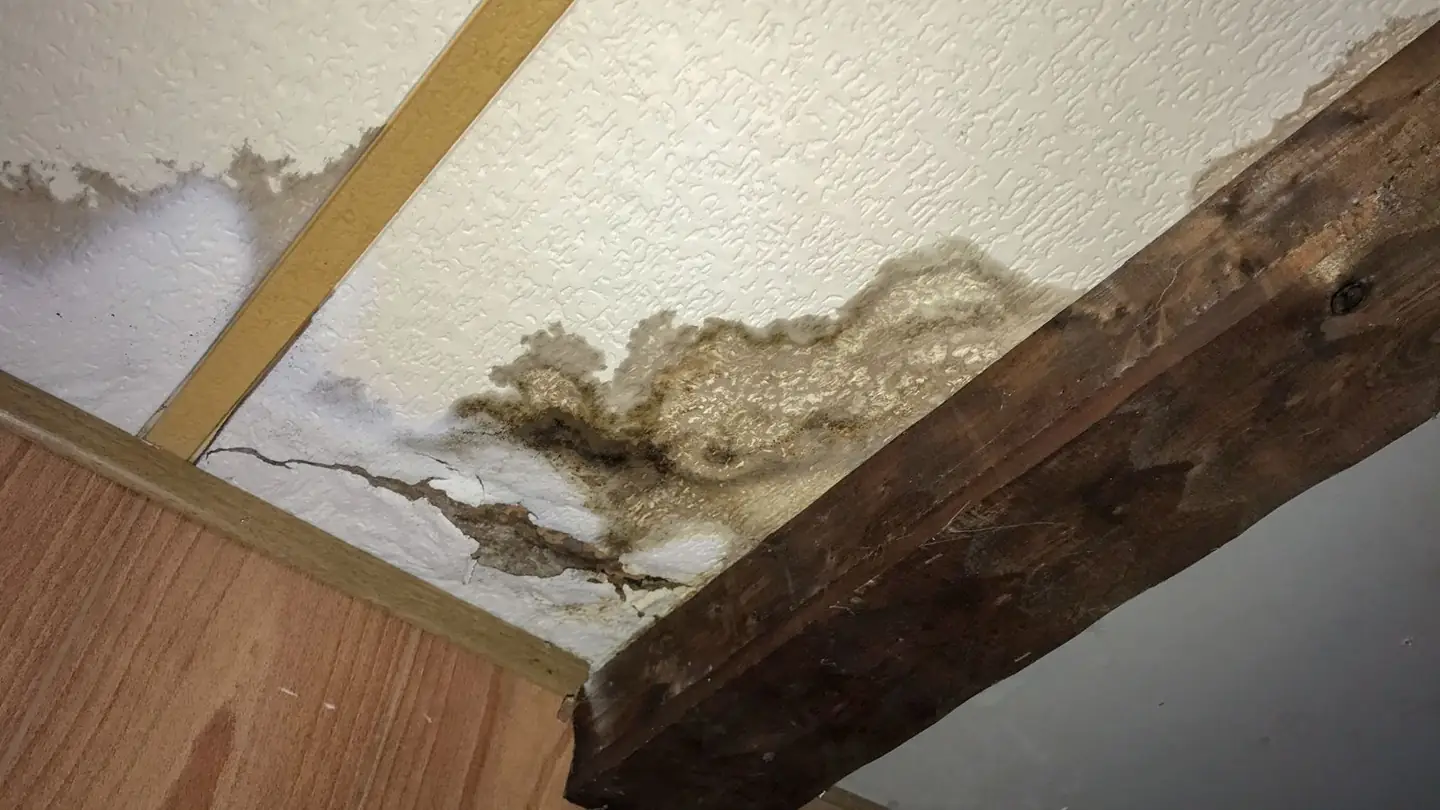
Why wet materials turn into a mold problem
Mold needs three things: spores, which are always present in indoor air, a food source such as paper-faced drywall, wood or dust, and moisture that lingers. Take away the lingering moisture and the problem has nothing to grow on. That is the entire logic behind fast drying.
A material that has been soaked does not dry on its own at the speed people expect, especially inside a wall cavity or beneath flooring. Surfaces can feel dry to the hand while the layer behind them is still reading wet on a moisture meter. That gap is where trouble starts.
A rough timeline of the first days
The stages below describe what generally happens and what to do at each point. They are a practical sequence, not a stopwatch, because building materials, temperature and the amount of water all change the pace.
Day of the leak: stop the water and remove the standing part
Shut the main water valve or the fixture valve first. Remove standing water with a wet vac or call for extraction, lift furniture off wet carpet, pull rugs and open interior doors so air can move. Photograph everything before you start.
The next day or two: start active drying
Fans alone help the surface, but trapped moisture needs air movers paired with LGR dehumidifiers, and a thermal imaging camera can show wet areas behind finishes. Wet carpet pad is usually discarded while the carpet may be saved, depending on the water category.
Days three and beyond: check, do not assume
Keep drying until each material reads dry on a meter. If a musty smell lingers, or a stain returns on a ceiling after it was painted, moisture is probably still present. Fix the source of any ongoing leak before cleaning anything.
Talk to dispatch
Describe what you see and we will tell you what happens next, in plain words, before any work starts.
How local weather feeds the problem
The National Weather Service's 1991 to 2020 normals for the Dallas-Fort Worth area put annual precipitation at 37.01 inches, with an average of 29 freezes per season. Wet years load roofs, gutters and foundations. Freeze seasons add burst pipes, which can leave a quiet wet cavity behind a wall for days before anyone sees a stain.
That cycle means a property here can take on moisture from the sky in spring and from a split line in winter. Know where your main shutoff is, and look at ceilings and wall bases after any heavy rain or hard freeze.
Signs moisture is still in the structure
- A musty smell in a room that looks clean
- Paint bubbling, peeling or showing tide-line stains
- Baseboards or drywall edges that feel soft or look swollen
- Hardwood cupping or lifting at the boards
- Condensation on windows or cold surfaces in a closed room
- Visible spotting on walls, ceilings, or the underside of carpet
What to do and what to avoid while you wait
Do not run a regular household fan toward a wet wall and call it done, and do not paint or caulk over stains, because that hides the evidence and traps moisture. Skip bleach as a cure: it does not dry anything, and wet porous materials hold moisture below the surface.
Keep the area as dry as you can, move belongings off wet floors, and keep records. If an insurance claim is possible, remember that Texas policies usually exclude mold cleanup and testing unless the coverage was extended, so quick drying is also the cheapest protection against a mold bill.
When visible mold has formed: the 25 square foot line
The Department of Licensing and Regulation draws a clear line by size. When visible mold spans 25 contiguous square feet or more of a covered home, a state-licensed mold remediator must do the work. Anything smaller may be cleaned by an owner or maintenance staff, though the leak must still be fixed first.
Hiring has a second constraint. Assessment and remediation on one project generally cannot be handled by the same person, and the Certificate of Mold Damage Remediation can come only from a licensed remediator. If a lender or buyer will ask for clearance, plan for an independent assessor from the start.
Where mitigation and remediation fit
Catching water early is the job of water mitigation, which dries and stabilizes the structure before mold has a foothold. Once mold is visibly present, mold remediation uses containment barriers, HEPA air scrubbers and negative air machines to remove it, with antimicrobial treatment where appropriate. Ask any company whether its crews work to ANSI/IICRC S500 and S520.
Homeowners in neighboring Lewisville and Plano face the same moisture timeline, and the dispatch line is open around the clock for same-day response when available.
Local note
The Colony conditions that keep walls wet
The Colony sits on the shore of Lewisville Lake, with about 23 miles of shoreline inside city limits according to the city. Homes near the water often have humid air around them, so a slow plumbing leak has less chance to dry out unnoticed. Check cabinets under sinks and the wall behind water heaters seasonally.
If water enters after a freeze, ask whether your home's pipes run through exterior walls or an unheated attic. The 29 average freezes a season in the climate normals are why insulating exposed lines is worth the effort, as a burst line floods fast and is hard to spot behind drywall.
Frequently asked questions
How fast does mold grow after water damage?
It depends on the material, the temperature and how wet it stays, so no honest answer fits every house. The practical rule is to start drying immediately and keep going until moisture readings return to the dry standard for each material.
Can I clean mold myself?
Smaller than 25 contiguous square feet, an owner or maintenance staff can handle it under Texas rules. Reaching 25 square feet means a state-licensed mold remediator takes the job. In both cases, stop the water source first.
Does homeowners or renters insurance pay for mold?
Often not. The Texas Department of Insurance says mold cleanup and testing generally fall outside a policy unless coverage was added, and mold from gradual leaks is usually excluded. Ask your insurer what your policy says.
Should the same company test and remove the mold?
Generally no. Texas keeps those roles apart, so the assessor and the remediator on a project are different people. Clearance is a final check by a licensed assessor other than the one who wrote the protocol.
Is bleach a good way to stop mold after a leak?
It does not dry the structure, which is what removes the mold's moisture supply. Dry the materials first and discuss cleaning products with a licensed professional. Questions about health effects belong with a physician.
Do lakeside homes in The Colony need extra attention after a leak?
They deserve a closer look. With about 23 miles of Lewisville Lake shoreline in the city, humid air can slow drying, so ask your restoration crew to take readings in wall bases and crawl areas before they leave.