Professional water damage restoration runs in nine steps: the call, a safety check, stopping the source, moisture mapping, water extraction, structural drying, monitoring, cleanup and finally repair. Mitigation (steps two through seven) protects the building. Repair (step nine) puts it back together, and that second part is where the city gets involved.
Here is the whole path, what each stage takes in general terms and what is worth asking. Timelines vary with the water category, the materials and the weather, so no stage below carries a fixed number of hours.
The nine steps at a glance
| Step | What happens | What to ask |
|---|---|---|
| 1. First call | Dispatcher asks about the source, location, how long water has been present and whether anyone is at risk. | Is same-day response available for my address? |
| 2. Safety check | Crew checks for live electrical, slip hazards, sewage and structural sagging before touching anything. | Who decides whether power stays on? |
| 3. Source stop | Water supply is shut off or the leak is isolated. Roof or plumbing repair may be a separate trade. | Is the leak actually stopped? |
| 4. Moisture mapping | Moisture meters and a thermal imaging camera show how far water traveled, and a category and class are assigned. | Will I get the readings and a written scope? |
| 5. Extraction | Pumps and truck-mounted or portable extractors pull standing and absorbed water. | What gets removed rather than dried? |
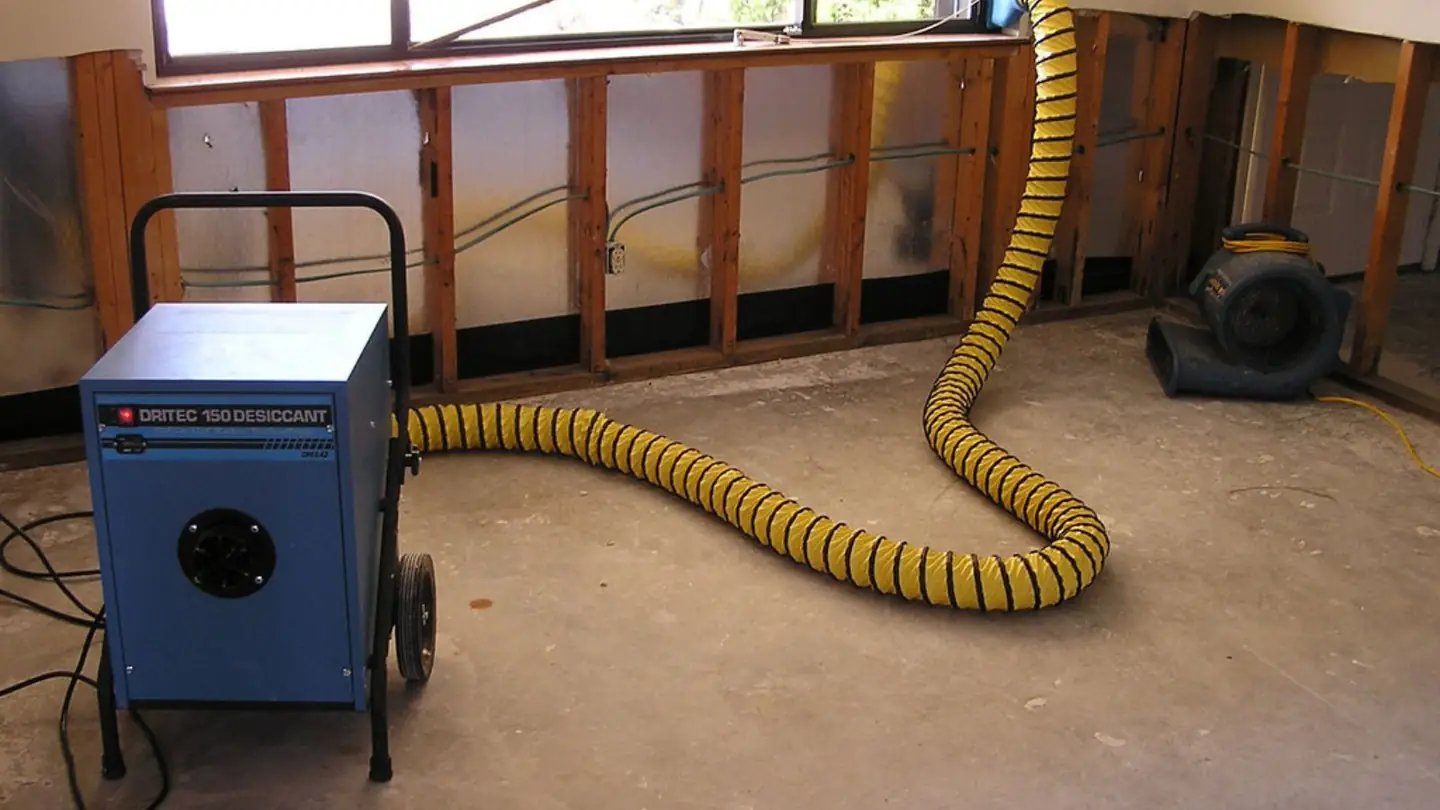
| 6. Structural drying | Air movers and LGR or desiccant dehumidifiers are placed to a drying plan. | How is the equipment count decided? |
| 7. Monitoring | Crew returns to re-read moisture and adjust equipment until materials reach their dry standard. | When will readings be shared? |
| 8. Cleanup | Surfaces are cleaned, sanitized where needed and odor sources removed. | Was this Category 2 or 3 water? |
| 9. Repair | Drywall, insulation, flooring, paint and trim are replaced as scoped. | Does this need a city permit? |
Not every job needs every step. A small clean-water leak may skip demolition, while a sewage backup adds a lot more at step 8.
Talk to dispatch
Describe what you see and we will tell you what happens next, in plain words, before any work starts.
Steps one to three: the call, the safety check and the source
The first call sets the pace. Expect questions about where the water started, which rooms are wet, how long it has been there and whether any water is near electrical equipment. Have the answers ready, and if you can, photograph the damage before anyone moves anything.
On arrival the crew checks for hazards before work begins: live circuits, slippery floors, ceilings that are bowing under trapped water and anything that smells like sewage. Stopping the source is next. If a supply line failed, close the shutoff valve at the fixture or the main valve at the house. If water is arriving from a roof or a city line, the fix belongs to a roofer, a plumber or the utility.
Steps four to six: mapping, extraction and drying
Moisture mapping is where a good crew separates itself from a quick mop-up. A meter reads moisture in drywall, framing and flooring, and a thermal imaging camera highlights cooler, wetter zones behind finishes. The crew then records the water category (1, 2 or 3) and the class (1 to 4, based on how much material is wet), which drive the equipment plan.
Extraction removes the bulk water first, because every gallon pulled out as liquid is a gallon the dehumidifiers do not have to handle as vapor. After that, air movers push air across surfaces while LGR or desiccant dehumidifiers pull moisture out of the room. Wet carpet pad, saturated insulation and contaminated drywall are usually cut out at this stage, rather than dried.
Step seven: monitoring is the part people skip
Drying is not complete when the room feels dry. A crew should come back on a schedule, re-read the same points on the map, move or pull equipment as areas finish and keep going until each material returns to the dry standard for that material. This is general practice under ANSI/IICRC S500, and it is a fair thing to ask any company whether its crews follow it.
Ask for the readings in writing. Those numbers show an insurer, a buyer or a lender that the structure actually dried, which matters more than a crew's promise.
Steps eight and nine: cleanup and rebuild
Cleanup covers sanitizing affected surfaces, treating them with antimicrobial products where the water category calls for it and removing debris. Water mitigation is the umbrella term for steps two through seven, so a company that offers it should be able to explain each one without hedging.
Repair is the rebuild: new drywall, insulation, texture, paint, flooring and trim. Some owners hire the restoration company for it, and others use their own contractor. Either is fine if the scope is written down and matches what the insurer approved, which is why permanent repairs should wait until your insurer has inspected.
When emergency removal is the first move
Some jobs cannot wait for a full scope. If water is still pouring or pooled several inches deep, emergency water removal comes first, then the mapping and drying plan follow. The dispatch line is staffed around the clock for this reason.
Local note
The Colony: permits and the city's water
Rebuilding is where the city gets involved. The permit office at 6053 Main Street covers additions, alterations and repairs to existing buildings plus plumbing, electrical and mechanical work, and its page does not mention water damage repair, so call before step nine and ask whether your rebuild needs one. A new water heater line, a replaced panel or a rebuilt wall with new wiring are the kinds of work that may.
Water here comes from the city-owned The Colony Water Utility, which draws on five city wells and treated surface water purchased from Dallas Water Utilities, per the city's water quality report. If a burst main or a service line outside your meter is the cause, that is a utility call, and the city runs a water and sewer emergency line for after-hours problems. Stopping the source is sometimes a utility job.
Frequently asked questions
Do I need to wait for my insurer before starting mitigation?
No. The Texas Department of Insurance advises protecting the property from further damage and keeping receipts, because insurers may deny a claim if you let it worsen. Photograph first, mitigate, and hold off on permanent repairs until the adjuster has inspected.
How long does structural drying take?
It depends on the water category, the materials involved, how long they were wet and the conditions inside the home. A crew should monitor readings and tell you when each material reaches its dry standard, rather than quoting a fixed number up front.
Why does the crew cut out drywall that looks fine?
Drywall that has wicked up contaminated water, or has trapped water behind paint or paneling, can stay wet and feed mold. Moisture meters and thermal imaging show where. If readings say it is wet inside, removal is usually faster than trying to dry a sealed cavity.
Can the restoration company also do the rebuild?
Many can, and some owners prefer a separate contractor. Either way, get the repair scope in writing, ask whether a permit applies and keep it consistent with what your insurer has approved.
Who do I call if the water in my yard is the city's line?
In The Colony, call the city's Public Works and Utilities, which also runs a water and sewer emergency line for after-hours issues. Once the line is isolated, a restoration crew can dry the damage.
Do you serve nearby cities?
Yes, including Frisco and Carrollton, using the same nine-step process.